Best Things to Do in Hail: Sights, Activities & Experiences
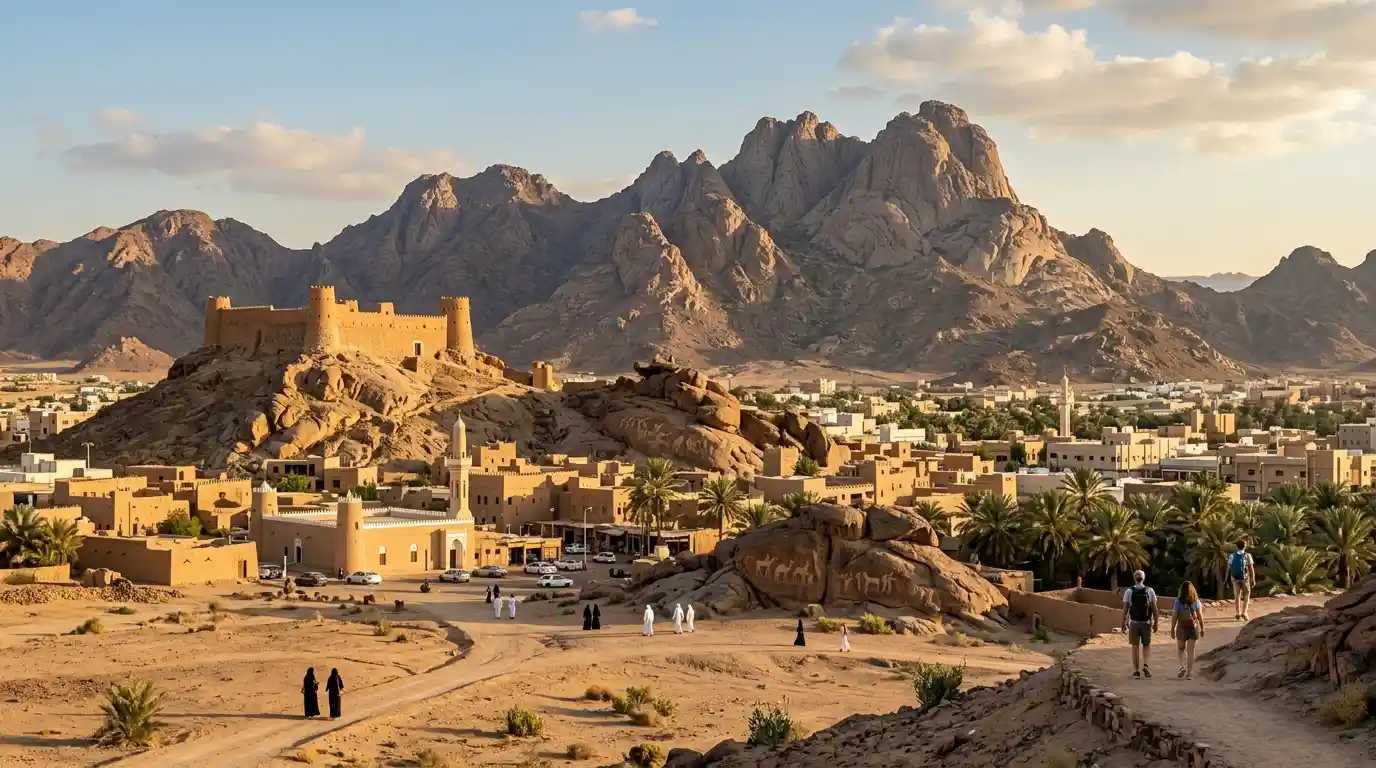
The best things to do in Hail bring together some of northern Saudi Arabia’s strongest contrasts: hilltop forts above a modern city, monumental mud-brick architecture, mountain viewpoints, traditional markets, open desert landscapes and rock art recording thousands of years of human activity. For a first visit, prioritize A’arif Fort, Al Qishlah Palace, Al Samra Mountain and the historic center, then make time for Jubbah and Jabal Umm Sinman if you can travel beyond the city. Travelers with additional time can add Faid Historic City, mountain and desert experiences, local food, museums and quieter heritage sites.
Hail developed around important routes through northern Arabia, and its location between mountains, plains and the Great Nafud helped shape a destination where archaeology, desert movement and urban heritage remain closely connected. Visit Saudi highlights A’arif Fort, Al Qishlah Palace, Jubbah’s UNESCO-recognized rock art, Hail’s mountains and Barzan’s traditional market among the defining experiences of the destination.
That mixture is what makes the things to do in Hail more varied than a quick glance at the city map suggests. Some attractions sit within Hail itself, while several of the region’s most important cultural landscapes require substantial drives outside the city, so a successful visit depends on choosing between urban sightseeing and wider provincial exploration rather than trying to treat everything as one compact cluster.
For general destination planning, use the Hail travel guide. Travelers placing Hail inside a broader Kingdom trip can also start with the Saudi Arabia travel guide.
Best Things to Do in Hail at a Glance
| Experience | Best for | Why it stands out |
|---|---|---|
| A’arif Fort | First-time visitors | Hilltop heritage and wide views across Hail |
| Al Qishlah Palace | Architecture and history | Monumental Najdi-style mud-brick complex |
| Al Samra Mountain | Views and evenings | Elevated perspective over the city |
| Jubbah rock art | Archaeology | One component of Hail’s UNESCO World Heritage property |
| Jabal Umm Sinman | Ancient landscapes | Rock carvings within a dramatic desert setting |
| Barzan heritage area | Markets and local culture | Traditional commercial and historic atmosphere |
| Hail Regional Museum | Historical context | Useful introduction before wider exploration |
| Aja Mountains | Nature and photography | Rugged granite scenery close to the city |
| Al-Didhan Reserve | Quiet nature | Dunes, vegetation and open landscapes |
| Faid Historic City | Archaeology and routes | Historic settlement tied to long-distance travel |
| Local food and cafes | Everyday culture | A relaxed way to experience contemporary Hail |
| Desert experiences | Adventure | Open terrain beyond the urban area |
The best things to do in Hail are easier to appreciate when you divide them into three groups: city heritage, mountain and desert landscapes, and archaeological day trips. That structure keeps the trip varied and prevents long drives from consuming the time you intended to spend actually exploring.
Start at A’arif Fort
A’arif Fort is one of the essential things to do in Hail because it combines history, traditional architecture and one of the clearest elevated views across the city. Built from stone and mud on a hill overlooking Hail, the fort functioned historically as a defensive observation point, and its prominent location still makes it one of the city’s most recognizable landmarks.
The view matters almost as much as the structure. From the elevated position, the relationship between urban Hail, surrounding mountains, older neighborhoods and open landscape becomes much easier to understand. That makes A’arif an excellent first stop rather than something to save until the end.
Walk through the site slowly enough to notice the defensive logic of the building: thick walls, passages, lookout positions and the way the fort follows the contours of its hill. Its architectural value comes partly from adaptation to terrain rather than elaborate decoration.
Photography is particularly rewarding when lower light begins defining the textures of mud and stone. Travelers whose trip is heavily camera-focused can compare this with other locations in Hail photography spots rather than turning this broad guide into a technical photo itinerary.
Explore Al Qishlah Palace
Al Qishlah Palace is another of the defining things to do in Hail, but it feels very different from A’arif Fort. Instead of occupying a steep hilltop, the palace is a large rectangular mud-brick complex in the historical and commercial heart of Hail, with extensive walls, internal courtyards, rooms and defensive towers reflecting Najdi architectural traditions.
Its scale is the main impression. Visitors accustomed to compact historic houses may be surprised by the size of the complex and the repetition of arcades, rooms and courtyard spaces. Look beyond the fortress-like exterior and pay attention to plaster decoration, wooden elements and the organization of interior space.
A’arif Fort and Al Qishlah complement each other well. The fort explains Hail from above and from a defensive perspective; Al Qishlah reveals a much larger institutional form of traditional architecture at street level.
Opening arrangements at heritage buildings can change because of restoration, events or operational requirements. Check current official information before building a tightly timed visit around interior access.
Travelers who want to concentrate on architecture, forts and archaeological places can continue with historical places in Hail.
See the UNESCO Rock Art at Jubbah
For many culturally curious travelers, the most extraordinary things to do in Hail are not inside the city at all. Jubbah, northwest of Hail, contains Jabal Umm Sinman, one of two components forming the UNESCO World Heritage property known as the Rock Art in the Hail Region of Saudi Arabia.
UNESCO describes Jabal Umm Sinman as a landscape overlooking the location of a former freshwater lake, where numerous petroglyphs and inscriptions preserve evidence of people and animals that occupied or crossed the area over immense spans of time. Together with the Shuwaymis component farther south, the property represents one of the richest rock-art complexes in Saudi Arabia and the wider region.
This is one of the things to do in Hail that deserves more than a rushed photograph. Carved animals, human figures and inscriptions become more meaningful when you understand them as records created across changing environments, from wetter landscapes to the desert conditions visible today.
Visit Saudi currently identifies Jabal Umm Sinman as a visitor attraction near Jubbah and notes that the site contains extensive rock art and inscriptions. Access arrangements and visitor hours can change, so confirm current information before undertaking the drive.
A knowledgeable guide can significantly improve the experience because many carvings are difficult to interpret without context. Look closely, photograph responsibly and avoid touching, tracing or otherwise damaging rock surfaces.
Understand Why the Hail Rock Art Matters
The rock art is not important merely because it is old. UNESCO identifies two separate landscapes—Jubbah’s Jabal Umm Sinman and Jabal Al-Manjor with Jabal Raat near Shuwaymis—that together document human and animal imagery across roughly ten millennia of changing environmental and social conditions.
At Jubbah, the former lake environment helps explain why people and animals repeatedly used the area. At Shuwaymis, extensive carvings occur along rocky escarpments associated with a valley environment that later became much drier.
These details transform rock-art viewing from a hunt for individual pictures into one of the intellectually richest things to do in Hail. The carvings help visitors think about climate, movement, hunting, herding, animals and human settlement across timescales far beyond the historic forts of the modern city.
Because Jubbah and Shuwaymis are significant journeys rather than quick urban stops, detailed sequencing belongs in the Hail itinerary rather than being reproduced as a fixed schedule here.
Walk Around Jubbah Beyond the Main Rock-Art Panels
Jubbah itself adds context to the archaeological landscape. The settlement lies amid the southern edge of the Great Nafud, and the relationship between town, sandstone formations and open desert helps explain why this part of the province feels so different from central Hail.
Visit Saudi highlights Jubbah not only for ancient carvings but also for its wider cultural heritage, while Al Naif Museum provides a traditional-palace setting with collections related to regional life and material culture.
If you have already driven to Jubbah, allow enough time to see more than one rock panel before returning. A museum or heritage stop creates a useful bridge between prehistoric evidence and the more recent traditions of northern Saudi communities.
Travelers interested specifically in collections can compare options through best museums in Hail.
Visit Al Samra Mountain for City Views
Al Samra Mountain is one of the easiest outdoor things to do in Hail because it provides an elevated landscape experience without requiring a long excursion into the province. Visit Saudi identifies it as a prominent mountain viewpoint overlooking the city and highlights the area for evening scenery.
The mountain works particularly well late in the day, after indoor heritage sightseeing. You can move from the enclosed courtyards of Al Qishlah to an open view across the city, creating a natural change in pace.
Evening is appealing because the city begins to illuminate below, while sunset or softer late-afternoon light can bring more depth to surrounding ridges. Conditions still matter: wind, temperature and visibility can influence how long you want to remain outdoors.
Travelers who want a night-focused plan can use things to do in Hail at night rather than duplicating nightlife and evening recommendations here.
Explore the Aja Mountains
The Aja Mountains form one of Hail’s defining natural landscapes and are among the most rewarding things to do in Hail for travelers who enjoy rugged scenery more than formal attractions. Visit Saudi describes the range as a major natural feature associated with the destination’s history and outdoor appeal.
Granite formations, valleys and open mountain views provide a dramatic counterpoint to the city’s mud-brick heritage. Depending on the specific location and current conditions, visitors may focus on scenic driving, walking, photography or simply finding a suitable viewpoint.
Do not assume that every mountain track is appropriate for an ordinary rental vehicle. If you plan to leave paved roads or enter isolated terrain, understand the road, vehicle and communications requirements first.
Those seeking a more active desert or off-road experience should move to the specialist guide to desert safari in Hail rather than using this broad page as technical driving advice.
Relax at Aja Park
Families and travelers needing an easier outdoor stop can consider Aja Park. Visit Saudi describes the park as a family-oriented leisure area with open recreational space, dining and cafe facilities, shopping and other activities.
This is one of the things to do in Hail that works best as a break rather than a headline cultural attraction. After a morning involving forts, museums or long drives, a park gives families time to reset without abandoning the sightseeing day altogether.
Its practical value increases for groups with mixed interests. Children can have more space, while adults can pause for food or coffee instead of asking everyone to move directly into another museum.
Parents planning the trip around younger travelers can find a fuller set of options in Hail with kids.
Spend Time at Al-Didhan Reserve
Al-Didhan Reserve provides another side of the region’s natural character. Visit Saudi currently presents it as a quiet area north of Hail with dunes, vegetation and open desert scenery, making it suitable for visitors who want a calmer landscape experience away from the urban center.
The reserve is not a substitute for Hail’s major mountain or archaeological landscapes. Its appeal is quieter: open space, natural textures, changing light and a slower rhythm.
This is particularly useful when choosing things to do in Hail after several architecture-heavy stops. A nature reserve or desert viewpoint prevents the trip from becoming an endless sequence of mud-brick walls and historical interpretation.
Outdoor conditions change, so ask about current access and road suitability before making a dedicated journey.
Explore Faid Historic City
Faid Historic City is one of the most interesting things to do in Hail for travelers fascinated by long-distance routes and the movement of people across Arabia. Visit Saudi includes Faid among the region’s major heritage attractions and describes it as an important historic stop associated with travel and pilgrimage routes.
The ruins and archaeological remains help explain Hail’s strategic geography. Settlements in this region were not isolated desert communities; they interacted with travelers, trade and pilgrimage networks crossing enormous distances.
Faid is best approached as an archaeological landscape rather than as a reconstructed theme attraction. Wells, structural remains, walls and the spatial organization of the settlement reward visitors who are comfortable imagining how a historic stopping place functioned.
Because reaching sites like Faid can consume a meaningful part of the day, compare it with other excursions through day trips from Hail before deciding whether it fits your available time.
Visit Barzan’s Heritage Area and Market
Barzan is closely connected with Hail’s urban history, and the heritage area provides one of the more atmospheric things to do in Hail for travelers who enjoy traditional commercial districts.
Visit Saudi identifies Souq Barzan as a local market associated with crafts, spices and cultural goods, while Barzan Palace remains an important part of the city’s historical memory and surviving architectural landscape.
Markets are best experienced without an aggressive shopping checklist. Browse, notice what residents are buying, compare locally relevant goods and allow the setting itself to be part of the experience.
If shopping becomes a major part of your trip, use shopping in Hail for the distinction between souqs, malls and local purchases rather than expanding that specialist intent here.
Learn About Hail Before Exploring Further
A museum visit early in the trip can make many later things to do in Hail more meaningful. Archaeology, traditional architecture, regional trade, household objects and local heritage are easier to connect once you have basic historical context.
Visit Saudi specifically recommends Hail Regional Museum as a useful starting point before outdoor heritage exploration, while Jubbah’s Al Naif Museum offers a more intimate collection within a historic palace environment.
You do not need to visit every museum. Choose one that matches your interests, then use the rest of your time to see the landscapes and structures that the collection helps explain.
This balance is important because the best things to do in Hail are strongest when indoor interpretation and outdoor exploration support each other.
Discover the Story of Hatim Al Tai
Hail is closely associated in Arab cultural memory with Hatim Al Tai, the poet and figure celebrated for extraordinary generosity. Visit Saudi includes sites and viewpoints connected with his story among wider Hail experiences.
Travelers unfamiliar with the tradition should approach these places as cultural and literary heritage rather than expecting a single monumental attraction. The value comes from understanding how stories of hospitality and generosity became linked with the identity of the region.
That theme also helps explain why hospitality appears so frequently in descriptions of Hail. Cultural reputation, landscape and historical narrative reinforce one another.
For deeper regional context rather than a general attractions list, continue to culture and heritage in Hail.
Try Hail’s Local Food
Food deserves a place among the best things to do in Hail because a heritage-rich destination becomes much more understandable when its cuisine is treated as part of culture rather than simply a break between attractions.
Visit Saudi’s current Hail coverage incorporates traditional meals and local dining into destination experiences, presenting food alongside mountains, heritage and archaeology rather than as an unrelated add-on.
Leave enough time for at least one regional meal instead of scheduling attractions continuously from morning to evening. Asking about local dishes and preparations often produces a more memorable meal than ordering only the most familiar items.
Specific culinary traditions belong in food in Hail, while venue selection belongs in best restaurants in Hail.
Take a Proper Coffee Break
Contemporary cafes are another easy way to experience everyday Hail. Official tourism material incorporates cafe stops into suggested Hail experiences, reflecting how naturally coffee fits between cultural sightseeing and evening activity.
A cafe stop is particularly useful during the warmest part of a long sightseeing day. Rather than forcing another outdoor attraction when conditions are uncomfortable, pause, rest and continue later.
Travelers interested in cafe selection rather than sightseeing can use best cafes in Hail without repeating individual venue recommendations here.
Look for Free Things to Do in Hail
Several enjoyable things to do in Hail do not inherently require a large attraction budget. Mountain viewpoints, selected public spaces, markets and some natural or heritage environments can provide substantial value without turning every stop into a ticketed experience.
However, free access should never be assumed permanently. Heritage restoration, organized events or operational changes can alter admission conditions, so confirm current information when a specific attraction matters to your plans.
Travelers prioritizing costs can use free things to do in Hail and the broader Hail on a budget guide for price-conscious decisions.
Choose Indoor Activities During Less Comfortable Weather
Hail’s mountains and deserts are a major attraction, but weather still determines how enjoyable outdoor sightseeing feels. Museums, heritage interiors, shopping environments, restaurants and cafes provide alternatives when heat, cold, wind or other conditions make long outdoor periods less appealing.
This flexibility makes planning the things to do in Hail easier than treating every hour as a mountain or desert excursion. Reserve the most weather-dependent activities for favorable conditions and keep indoor options as practical substitutes.
For a dedicated weather-proof list, use indoor things to do in Hail. Seasonal climate detail belongs in Hail weather by month.
See Hail After Dark
Evening is a strong time for city-based things to do in Hail. Al Samra Mountain can provide city views, while restaurants, cafes, markets and suitable public spaces offer a relaxed way to continue after formal heritage sightseeing.
Official tourism guidance specifically highlights Al Samra Mountain in the evening, when city lights become part of the view.
Nighttime experiences are generally more social and scenic than museum-focused. A good evening may involve one viewpoint, a meal and coffee rather than another long list of attractions.
Add a Desert Experience
Hail’s position between mountains and major desert landscapes makes a desert outing a natural extension of the trip, but it should be planned according to terrain and driving experience rather than treated casually.
The destination’s official tourism material emphasizes desert reserves, mountain landscapes and wider outdoor exploration as important parts of the Hail experience.
If you are considering off-road travel, ask exactly what vehicle is required and whether a guide is appropriate. Sand, remote tracks, navigation and communications create different risks from ordinary city driving.
Travelers whose primary goal is overnight desert time should move to camping in Hail, while night-sky planning belongs in stargazing in Hail.
How to Choose the Best Things to Do in Hail
Heritage-focused travelers should prioritize A’arif Fort, Al Qishlah Palace, Barzan, a museum and Jubbah. This combination covers defensive architecture, institutional history, traditional commerce, collections and prehistoric rock art without repeating the same type of attraction.
Nature travelers should keep the city heritage stops shorter and devote more time to Aja Mountains, Al Samra, Al-Didhan and the wider desert. Archaeology enthusiasts may consider Jubbah essential and then evaluate whether Faid or more distant rock-art landscapes justify the additional drive.
Families should reduce the number of consecutive historical sites and mix parks, viewpoints and accessible museums into the day. Travelers visiting alone can use solo travel in Hail for more focused safety and pacing considerations.
The point is not to complete every item. The best things to do in Hail depend on whether you are more interested in rock art, architecture, mountains, local culture or desert landscapes.
How Many Days Do You Need in Hail?
Hail can provide a worthwhile introduction in a short stay, but travelers who want to see Jubbah or other provincial sites need to account for substantial driving. The attractions are too geographically dispersed to treat the destination like a compact old town.
If you have only a limited period, prioritize Hail city and one major excursion instead of attempting several remote sites. Additional days make it easier to combine heritage, archaeology and nature without constantly watching the clock.
Detailed scheduling belongs in one day in Hail, 2 days in Hail and 3 days in Hail rather than being duplicated under this broad activities guide.
Getting Around Hail Attractions
A car is highly useful for exploring things to do in Hail because city attractions and provincial sites operate at very different scales. Visit Saudi recommends car-based exploration for the region and notes that a vehicle provides flexibility for mountains and cultural attractions beyond the center.
Within Hail city, ride-hailing or taxis can cover many straightforward journeys. Once your plan expands to Jubbah, Faid or remote natural areas, transport becomes a much more significant part of the trip.
Do not underestimate distances simply because everything appears under the Hail destination label. Group city attractions together and treat each major out-of-town site as a deliberate excursion.
For transport choices, see getting around Hail. Drivers can use driving in Hail for road-specific planning.
When to Plan Outdoor Sightseeing
Outdoor things to do in Hail are generally easier to enjoy during milder conditions, particularly when your plans involve forts, mountains, desert areas or archaeological sites with limited shade. Visit Saudi’s destination guidance recommends cooler parts of the year for broader exploration and emphasizes mornings for sightseeing.
During hotter conditions, place exposed sites earlier in the day and use museums, meals or cafes as midday alternatives. During cooler periods, carry an extra layer because evening temperatures can feel substantially different from daytime conditions.
The dedicated best time to visit Hail handles seasonal tradeoffs in greater detail.
Where to Stay for Sightseeing
Travelers focused mainly on city things to do in Hail will generally value straightforward road access to A’arif Fort, Al Qishlah and central dining more than being close to one specific attraction. Those planning repeated excursions outside Hail should also consider how easily their accommodation connects to major roads.
There is no universal best area because a traveler visiting Jubbah and the mountains has different priorities from someone planning museums, cafes and short city journeys.
Accommodation selection belongs in where to stay in Hail so this page remains centered on experiences rather than hotel comparisons.
Practical Tips for Exploring Hail
Check current access before driving to heritage or archaeological attractions. Restoration, opening arrangements and temporary events can change the visitor experience.
Carry water whenever your plans extend into mountains, archaeological sites or desert landscapes. Even when temperatures feel comfortable, dry conditions and exposure can increase how much water you need.
Wear practical footwear. Mud-brick sites, rocky viewpoints and archaeological terrain are easier to explore in shoes with grip than in footwear selected mainly for city restaurants.
Respect rock art. Do not touch carvings, trace inscriptions, add markings or remove archaeological material. UNESCO recognition reflects the cultural importance of preserving the landscape and its physical evidence.
Treat functioning religious places respectfully, ask before photographing people closely and remember that traditional districts remain part of everyday community life.
Most importantly, plan realistic distances. Hail city, Jubbah, Faid and Shuwaymis should not be compressed into one imaginary compact attraction zone.
Frequently Asked Questions About Things to Do in Hail
What are the best things to do in Hail for a first visit?
The best things to do in Hail for a first visit are A’arif Fort, Al Qishlah Palace, Al Samra Mountain, a traditional market or heritage district, and one museum. If you have enough time for an excursion, Jubbah and Jabal Umm Sinman add one of the region’s most important archaeological experiences.
What is Hail famous for?
Hail is famous for its mountain landscapes, northern Arabian heritage, historic forts and the UNESCO-listed Rock Art in the Hail Region. The destination is also strongly associated with old trade and travel routes and with cultural traditions of hospitality.
Is Jubbah worth the drive from Hail?
Yes, particularly for travelers interested in archaeology, human history and desert landscapes. Jabal Umm Sinman at Jubbah forms one of the two components of the UNESCO World Heritage rock-art property and contains extensive petroglyphs and inscriptions.
What is the difference between A’arif Fort and Al Qishlah Palace?
A’arif Fort is a hilltop defensive structure with commanding views over Hail, while Al Qishlah is a much larger mud-brick palace and former military complex in the historical urban center. Visiting both provides a stronger understanding of Hail’s architecture than choosing only one.
Are there things to do in Hail with children?
Yes. Families can combine Aja Park, accessible museums, Al Samra Mountain and selected heritage sites, while older children interested in history may enjoy Jubbah’s rock art. The appropriate balance depends on heat, walking ability and driving tolerance.
Are there free things to do in Hail?
Yes. Mountain viewpoints, markets, public spaces and some natural or heritage attractions can provide low-cost experiences, although access arrangements can change. Check current official information for any attraction where admission conditions affect your plans.
Is Hail good for hiking and outdoor activities?
Yes. Hail is surrounded by mountain and desert landscapes that support walking, photography and wider outdoor exploration. The Aja Mountains and other natural areas are particularly relevant, although route conditions and vehicle requirements should be assessed before entering remote terrain.
Can you see ancient rock art near Hail?
Yes. Jabal Umm Sinman at Jubbah and the more distant Jabal Al-Manjor and Jabal Raat at Shuwaymis form the UNESCO World Heritage property known as Rock Art in the Hail Region of Saudi Arabia.
Is Hail worth visiting without going to Jubbah?
Yes. A’arif Fort, Al Qishlah Palace, Al Samra Mountain, local markets, museums, mountains and dining can support a worthwhile city-focused visit. Jubbah substantially increases the archaeological depth of the trip but is not the only reason to visit.
Do you need a car in Hail?
A car is highly useful, particularly if your list of things to do in Hail includes Jubbah, mountain landscapes or other provincial attractions. City-only visitors can rely more heavily on taxis or ride-hailing, but the wider destination is easier to explore with flexible road transport.
What are the best things to do in Hail at sunset?
Al Samra Mountain is one of the strongest choices because it provides an elevated view over the city and becomes especially atmospheric as daylight fades. Mountain and desert landscapes can also be rewarding, provided you have safe transport and enough familiarity with the route.
Should Hail be a city break or a regional road-trip base?
It can work as both. The city contains enough heritage, markets, viewpoints and dining for a focused visit, while Jubbah, Faid and the surrounding mountain and desert landscapes reward travelers who use Hail as a base for wider exploration.
Making the Most of the Best Things to Do in Hail
The best things to do in Hail become much more coherent when you recognize the connections between landscape and history. A’arif Fort overlooks a city shaped by movement through northern Arabia; Al Qishlah preserves a monumental form of traditional architecture; mountains define the visual character of the region; and Jubbah’s rock art pushes the human story back through thousands of years of environmental and social change.
That depth is unusual. UNESCO describes the Jubbah and Shuwaymis rock-art complexes as exceptional records of human creativity and adaptation within changing desert environments, while current Saudi tourism material presents Hail as a destination where those ancient landscapes remain connected with forts, markets, mountains and contemporary local life.
A strong visit therefore does not require racing through every possible attraction. Choose the things to do in Hail that fit your interests, allow enough time for the distances between major sites, combine at least one cultural landmark with one landscape experience, and give Jubbah proper attention if archaeology matters to you. Travelers still deciding whether the destination matches their trip can use is Hail worth visiting for that specific decision.