One Day in Al Ahsa: A Practical 24-Hour Itinerary
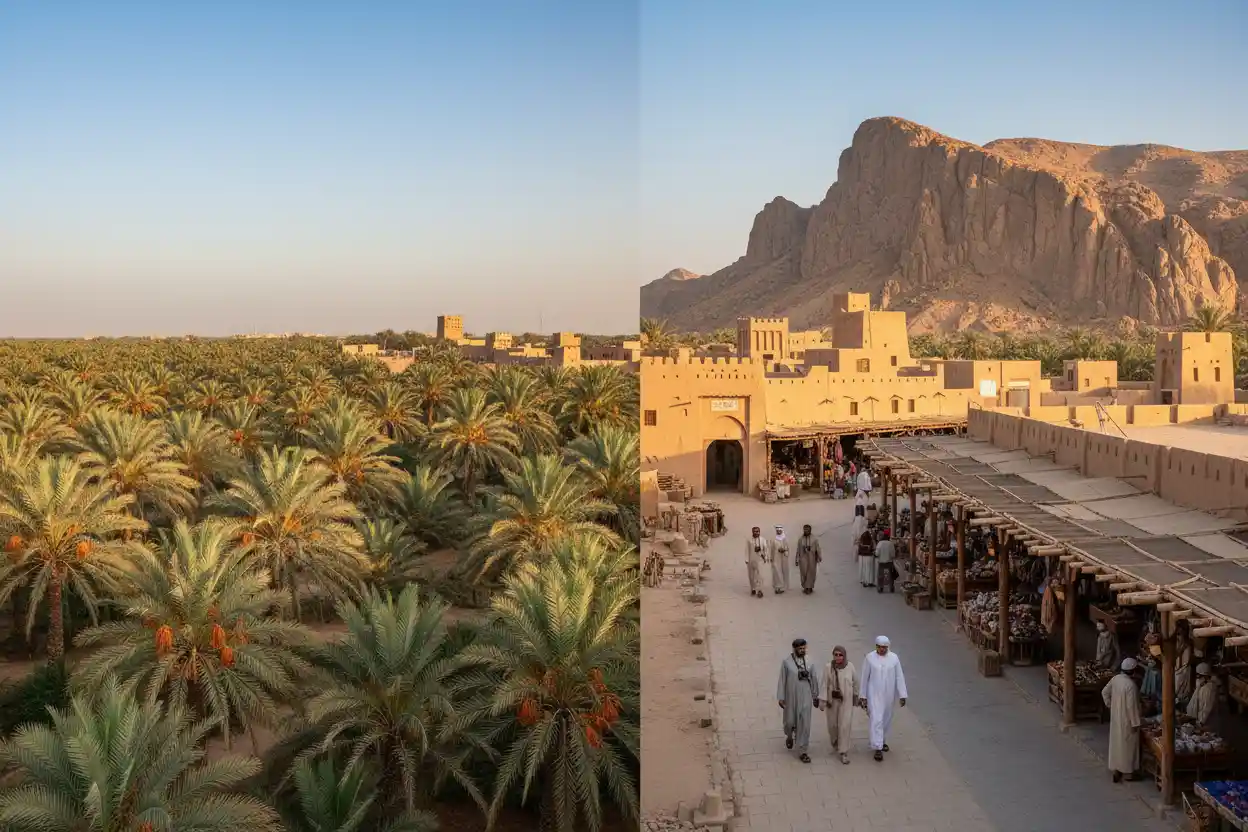
One day in Al Ahsa is enough to experience the destination’s essential character if you keep the route focused: begin with Al Ahsa Oasis in the morning, explore Al Qarah Mountain before the hottest part of the day, return to Al Hofuf for lunch and Ibrahim Palace, then finish at Al Qaisariyah Historical Market in the late afternoon and evening. This practical 24-hour itinerary deliberately leaves out distant or time-consuming excursions so you can experience the oasis, geology, architecture and traditional commercial life without spending most of your day inside a vehicle.
Al Ahsa deserves more than a day when your schedule allows it. Visit Saudi describes a weekend as sufficient for discovering the principal highlights, while UNESCO defines Al-Ahsa Oasis as an enormous living cultural landscape consisting of gardens, canals, springs, wells, historic buildings, archaeological sites and more than 2.5 million date palms. A single day therefore cannot cover every fortress, village, museum, farm, lake and archaeological component. What it can do is introduce the four elements that explain the destination best: water and agriculture, the limestone landscape, historic Al Hofuf and traditional commerce.
This schedule owns the exact one-day itinerary intent. It should not be stretched into a shortened version of a longer visit. If you have additional time, follow 2 days in Al Ahsa or 3 days in Al Ahsa instead of adding their extra excursions to this already full day. Travelers who want flexible route-planning advice rather than an hour-by-hour schedule should use the broader Al Ahsa itinerary.
One Day in Al Ahsa at a Glance
| Approximate time | Stop | Main experience | Suggested time |
|---|---|---|---|
| 7:30–9:00 | Al Ahsa Oasis | Date palms, irrigation landscape and oasis atmosphere | 1–1.5 hours |
| 9:15–11:30 | Al Qarah Mountain | Limestone formations, caves and oasis views | 2–2.25 hours |
| 12:00–13:30 | Lunch and rest | Local food and recovery | 1–1.5 hours |
| 14:00–16:00 | Ibrahim Palace | Architecture, political history and fortifications | 1.5–2 hours |
| 16:15–17:00 | Historic Al Hofuf | Short heritage walk or optional nearby stop | 30–45 minutes |
| 17:00 onward | Al Qaisariyah Market | Souq atmosphere, crafts, dates, shopping and dinner | 2+ hours |
Treat these times as a practical sequence rather than fixed appointments. Current attraction hours, prayer periods, weather, traffic and seasonal operating arrangements can alter the day, so verify access before leaving your accommodation. The important feature is the order: outdoor landscape first, heritage later and the market toward evening.
For a broader overview of what you are choosing from, read things to do in Al Ahsa before the trip.
Before You Start: Stay Close to Al Hofuf
A one-day itinerary becomes much easier when you begin from Al Hofuf or another well-connected location close to the historic city. Several of the afternoon and evening attractions sit around Al Hofuf, while the oasis and Al Qarah can be reached as outward morning excursions. Starting from a distant resort or peripheral property can consume a disproportionate amount of your limited sightseeing time.
Visitors staying overnight should prioritize practical location over a dramatic accommodation setting for such a short visit. The dedicated where to stay in Al Ahsa guide can help you compare central, road-accessible and more scenic options without turning this itinerary into an accommodation article.
Have transport organized before the morning begins. A rental car or private driver provides the greatest flexibility, while taxis and app-based rides can work for many established attractions. The main requirement is avoiding long periods of waiting between stops.
7:30 AM: Begin With Al Ahsa Oasis
Start your one day in Al Ahsa where the destination’s story begins: among the palms.
UNESCO describes Al-Ahsa Oasis as a continuously evolving cultural landscape in which gardens, springs, wells, canals, settlements and historic buildings developed through a long relationship between people and a desert environment. The property remains a working agricultural landscape rather than a preserved historical scene disconnected from modern life. Visit Saudi likewise describes the palm oasis as covering more than 85 square kilometers and emphasizes its combination of groves, underground springs, caves, mountains and plains.
A morning visit gives you the context necessary to understand everything later in the day. Ibrahim Palace and Al Qaisariyah Market did not develop randomly in an empty desert. Agriculture created permanent communities and commercial activity, while access to water supported one of the Arabian Peninsula’s most important settled landscapes.
Do not attempt to “see the whole oasis.” Its scale makes that impossible during a short visit. Choose an accessible palm area, organized farm experience or legitimate visitor route and spend enough time to appreciate the density of the vegetation, irrigation environment and contrast with the surrounding arid landscape.
Travelers wanting deeper coverage of the palm landscape should save that research for the dedicated Al Ahsa Oasis visitor guide or oases and green landscapes in Al Ahsa.
What to Look for in the Oasis
Look beyond the obvious beauty of the palms. Water is the key to understanding Al Ahsa.
UNESCO highlights the connection between springs, wells, open-air canals, gardens, villages and cities as one of the characteristics demonstrating the cultural landscape’s importance. The oasis therefore tells a story of engineering, agriculture and social organization as much as natural greenery.
Notice how cultivated land is organized, where water infrastructure remains visible and how agricultural areas relate to settlements. Even without a lengthy guided explanation, these physical relationships reveal why the oasis supported permanent life over such a long period.
A short morning walk or farm stop will give you more understanding than an hour of aimless driving through palm roads.
Is the Oasis Free to Visit?
Visit Saudi currently states that tickets are not required to enter the general palm-oasis attraction it promotes. That does not mean every private farm, organized activity, transport service or visitor facility within the enormous oasis landscape is free.
If you want to keep the day inexpensive, enjoy publicly accessible scenery and pay only for experiences you genuinely value. The specialist free things to do in Al Ahsa guide is the better resource for a zero- or low-admission itinerary.
9:15 AM: Continue to Al Qarah Mountain
After the palms, head to Al Qarah Mountain while the day is still relatively fresh.
Visit Saudi describes Al Qarah as a natural and historical landmark within Al Ahsa, while Saudipedia places the mountain east of Al Hofuf and identifies it as a prominent limestone formation containing caves and narrow passages. The transition from dense palms to exposed rock is one of the most memorable contrasts you can experience during a short Al Ahsa visit.
Al Qarah deserves roughly two hours because it provides more than a single viewpoint. Walk through the developed cave environment, examine the rock surfaces and narrow formations, and allow time simply to understand the mountain’s scale.
The caves can feel noticeably different from exposed exterior conditions, but that should not encourage travelers to underestimate the heat outside. Carry water and wear footwear suitable for walking on firm but potentially uneven surfaces.
Why Al Qarah Belongs in a One-Day Itinerary
A single day requires strict prioritization, and Al Qarah earns its place because it introduces an entirely different dimension of Al Ahsa without sending you on an excessively distant excursion.
The oasis represents water and agriculture. Al Qarah represents geology and the physical landscape surrounding that agricultural system. Historic Al Hofuf later adds architecture and commerce.
Those contrasts allow one day to feel varied without becoming geographically chaotic.
The dedicated Al Qarah Mountain visitor guide should be used if you need detailed attraction-level planning. This itinerary only needs enough information to fit the mountain intelligently into the day.
How Long Should You Spend at Al Qarah?
About two hours is appropriate for most first-time visitors who have only one day in Al Ahsa.
A photography enthusiast may want longer, while a family with very young children may be satisfied more quickly. Do not stay so long that Ibrahim Palace and Al Qaisariyah become rushed later.
The one-day schedule works because no single attraction consumes half the available sightseeing period.
11:30 AM: Leave the Mountain Before the Day Becomes Too Compressed
Once you have explored the principal developed areas, return toward Al Hofuf.
Avoid adding another attraction simply because it appears close on your map. A one-day trip is easily damaged by “just one more stop” thinking. Every additional detour reduces the time available for lunch, parking, heritage exploration and the market.
This is also the correct point to assess your energy. If the morning took longer than expected, shorten the optional historic walk later rather than cutting Ibrahim Palace or Al Qaisariyah to a few photographs.
12:00 PM: Have Lunch and Rest
Lunch should be a genuine break rather than another rushed task.
Choose a restaurant along the route back toward central Al Hofuf and allow enough time to cool down, hydrate and sit comfortably. The afternoon will involve another significant walking period, and arriving at Ibrahim Palace already fatigued reduces how much you will appreciate it.
If you want a regional food experience, use lunch to try local or Saudi dishes without driving across the governorate for one famous restaurant. Geographic efficiency matters enormously when you have only one day.
Families should be particularly protective of this break. Children who receive enough food and rest are far more likely to enjoy the palace and market later.
2:00 PM: Explore Ibrahim Palace
Ibrahim Palace is the essential built-heritage stop on this itinerary.
Saudipedia describes the historic complex in Al Kut neighborhood as a large fortified site containing a mosque, central courtyard, barracks, officers’ quarters, military structures, storage areas, towers and defensive openings. Local building materials historically included mud mixed with straw, palm trunks, timber and stone.
The palace creates an important transition after the morning’s natural landscapes. You are now seeing how political authority, military protection and religious life were organized within historic Al Hofuf.
Walk through the complex slowly enough to understand how the spaces connect. Look at the defensive walls and towers first, then notice how the mosque and internal courtyards create a more complex environment than an ordinary standalone fort.
Do not attempt to memorize every construction phase. During a short visit, understanding the building’s functions is more useful than remembering a long chronology.
The dedicated Ibrahim Palace visitor guide can provide more detail for travelers whose main interest is architecture.
Why Ibrahim Palace Is the Right Fort for a One-Day Visit
Al Ahsa contains several important fortifications, but one day does not require you to visit them all.
Ibrahim Palace offers enough architectural and historical variety to represent this aspect of the destination effectively. Adding Sahood Palace or Khuzam Palace may appeal to a specialist in military architecture, but most first-time visitors gain more from moving onward to a different type of experience.
That is an important one-day principle: prioritize contrast, not completeness.
Travelers with a deeper historical interest can return on a longer trip and use historical places in Al Ahsa to compare the other forts, houses, schools, mosques and archaeological locations.
3:30–4:00 PM: Take a Short Historic Al Hofuf Walk
After Ibrahim Palace, spend a short period exploring the surrounding historic environment if the group still has energy.
The purpose is not to launch another full heritage itinerary. Walk enough to notice traditional façades, street proportions and the relationship between individual monuments and the wider historic district.
Architecture becomes more meaningful when it is seen as part of an urban fabric rather than isolated behind attraction gates.
Travelers who particularly enjoy this part of the day can later follow the dedicated heritage walk in Al Ahsa during a longer visit.
Optional Stop: House of Allegiance
If you have moved efficiently and historical architecture is a major interest, use part of this period for the House of Allegiance rather than an undefined walk.
Its domestic scale contrasts effectively with Ibrahim Palace and introduces a different layer of Saudi political and residential history.
Keep the stop short. Al Qaisariyah is still the major evening experience, and the market should not be sacrificed simply to accumulate another heritage attraction.
Should You Add a Museum?
Usually not during this exact one-day schedule.
A museum can be valuable, particularly for archaeology enthusiasts, but adding it means reducing time somewhere else. If poor weather or extreme outdoor conditions change the day, a museum may become an excellent substitute for part of the oasis or historic walk.
Otherwise, save museum exploration for a longer visit. Best museums in Al Ahsa can help choose one when you have sufficient time.
5:00 PM: Finish at Al Qaisariyah Historical Market
Al Qaisariyah is the ideal final major stop because the atmosphere becomes progressively more social and commercial as the sightseeing day winds down.
Saudipedia describes Al-Qaisariyah as a historic covered market in Al Hofuf containing more than 422 shops, with traditional architectural design using covered passages, natural airflow and daylight. The commercial mix includes handicrafts, leather goods, traditional clothing, spices, herbs, foods and Al Ahsa dates. UNESCO also identifies Suq al-Qaysariyah as one of the component areas within the Al-Ahsa Oasis World Heritage property.
Walk rather than shop immediately. Notice the roofed passages, repeating shop structures and movement of local commercial life before deciding whether you want to buy anything.
This stop completes the day’s historical sequence. The morning introduced the agricultural landscape that generated produce and trade; the afternoon introduced the fortified administrative environment; the market shows the commercial space where goods, crafts and people came together.
What to Buy at Al Qaisariyah
Dates are the most obvious souvenir because they connect directly with the oasis you explored in the morning. Traditional crafts, perfumes, spices, clothing and locally associated foods can also be meaningful purchases when you understand what you are buying.
Do not assume every object sold in a historic market is locally handmade. Ask questions when origin matters to you.
Travelers whose primary interest is shopping should use best souqs and traditional markets in Al Ahsa for deeper market coverage.
Dinner in or Near Historic Al Hofuf
Finish with dinner rather than another sightseeing transfer.
After a full day covering the oasis, Al Qarah, Ibrahim Palace and Al Qaisariyah, adding a distant nighttime attraction usually produces diminishing returns.
Choose a restaurant that fits naturally with your final location and allow the day to end slowly. Al Ahsa is strongly connected with dates, agriculture and traditional foodways, so dinner can remain part of the cultural experience without requiring another formal attraction.
Why Al Asfar Lake Is Not in This One-Day Itinerary
Al Asfar Lake is worthwhile, but it does not fit comfortably into a practical first-time one-day itinerary alongside the oasis, Al Qarah and historic Al Hofuf.
The lake involves a more substantial nature excursion and should not be treated like a quick urban stop. Adding it can turn the day into a sequence of long transfers and leave little time to appreciate the cultural heart of Al Ahsa.
If Al Asfar is your highest priority, build a specialized nature-oriented day around it and remove either the mountain or much of the urban heritage.
For most first-time travelers, it belongs more naturally in the longer duration itineraries.
Why Jawatha Is Also Optional With Only One Day
Jawatha Mosque has major historical and religious importance, but a realistic one-day schedule cannot include every important place without becoming rushed.
Travelers whose strongest interest is early Islamic history can substitute Jawatha for part of the oasis morning or the optional historic walk. Do not simply add it to the existing sequence.
This is one of the hardest choices in a 24-hour trip: an attraction can be highly important yet still not belong in the most balanced first-time route.
One Day in Al Ahsa for History Lovers
History-focused travelers should shift time away from the oasis morning without eliminating it entirely.
Spend enough time among the palms to understand the environmental context, then shorten Al Qarah slightly and devote more of the afternoon to the historic Al Hofuf cluster. Ibrahim Palace remains essential, while the House of Allegiance or another heritage structure becomes more worthwhile.
You can also use culture and heritage in Al Ahsa to replace natural attractions selectively.
Do not visit three similar forts merely because your interest is history. Different building types create a better historical narrative.
One Day in Al Ahsa for Nature Lovers
Nature-focused travelers can reverse the balance.
Spend longer among the oasis palms and at Al Qarah, then keep Ibrahim Palace to a focused visit before finishing at the market. This still preserves enough cultural context to understand the destination.
If you would rather see desert and wetland scenery than urban heritage, consider building a different one-day plan around Al Asfar Lake. That is no longer the balanced first-time schedule described here, but it may suit your priorities better.
The specialist best nature spots in Al Ahsa and outdoor activities in Al Ahsa pages can help make that choice.
One Day in Al Ahsa With Kids
Families should make the schedule lighter rather than simply completing every stop more quickly.
Keep the oasis introduction short and interactive, let Al Qarah become the principal morning attraction, take a long lunch break, then choose Ibrahim Palace or another single heritage stop before ending at the market.
Young children may have little interest in an additional historic walk after the palace. Skip it without hesitation.
The dedicated Al Ahsa with kids guide provides more age-specific activity choices.
One Day in Al Ahsa for Couples
Couples can follow the main schedule almost exactly but slow down around the oasis and market.
A morning among the palms, exploratory time at Al Qarah and an atmospheric evening in the souq create enough variety without needing additional entertainment.
Photography-oriented couples may also prefer arriving at the market later and using softer afternoon light around historic architecture.
One Day in Al Ahsa for Solo Travelers
Solo travelers gain flexibility because there is no group schedule to coordinate, but transportation still determines how much can realistically fit into the day.
Taxis or app-based transport may work for established attractions, while a rental car gives greater control over timing if you are comfortable driving locally.
Do not use the extra flexibility to add remote excursions without considering return logistics.
The solo travel in Al Ahsa guide covers the broader independent-travel considerations.
One Day in Al Ahsa on a Budget
A short visit can be surprisingly economical because several important experiences do not require the day to revolve around expensive entertainment.
Visit Saudi currently states that general access to the palm oasis does not require a ticket. Browsing Al Qaisariyah can also be enjoyed without obligatory shopping, while the largest variable expenses are usually transport, food and any ticketed attraction included in your route.
The most important budget strategy is geographical efficiency. Saving a small admission fee means little if poor routing creates several unnecessary taxi rides.
For detailed cost-conscious planning, use Al Ahsa on a budget.
How to Get Around During One Day in Al Ahsa
A private car, rental car or dedicated driver offers the greatest efficiency because you can move immediately from the oasis to Al Qarah and then back into Al Hofuf.
Taxis and ride-hailing can also work when pickup is reliable at each attraction, particularly if you do not want to drive. The disadvantage is waiting time and reduced flexibility if you change the route.
Public transport should only be used where the current route fits your exact journey without creating excessive transfers.
The detailed getting around Al Ahsa guide can help choose a transport method before the trip, while driving in Al Ahsa is more useful for self-drivers.
How Much Driving Should You Expect?
Expect the day to involve several vehicle transfers because Al Ahsa is not one compact pedestrian district.
The key is minimizing unnecessary driving. Complete the oasis and Al Qarah during the same outward morning period, then return toward Al Hofuf and keep the rest of the day concentrated around its historic area.
Avoid returning to the hotel between every attraction unless heat, children or health needs make the break necessary.
Best Time to Start
Start early enough that the oasis and Al Qarah happen before the middle of the day.
An early start is particularly valuable during warmer conditions because it protects outdoor sightseeing time and allows you to shift toward urban heritage later.
Do not start so early that attractions you intend to enter are still closed. Confirm current operating hours before choosing an exact departure time.
For seasonal conditions rather than the daily schedule, use best time to visit Al Ahsa and Al Ahsa weather by month.
What to Carry for the Day
Keep your day bag light enough for several walking stops but prepared for outdoor exposure:
- Drinking water.
- Comfortable walking shoes.
- Sun protection.
- Modest, breathable clothing appropriate to public and religious environments.
- A charged phone for navigation and transport.
- Portable battery if you expect heavy map or camera use.
- Essential medication.
- A small amount of extra space for anything purchased at the market.
Avoid carrying unnecessary luggage between attractions. Leave large bags securely at your accommodation or in the vehicle where appropriate.
How Weather Can Change the Schedule
Weather should influence the order without destroying the whole itinerary.
Strong heat makes the early oasis-and-mountain start even more important. Rain or poor outdoor conditions may justify shortening the oasis experience and adding more covered heritage or market time. Dust or reduced visibility can also lower the value of scenic outdoor stops.
Use the current forecast on the morning of your visit. Monthly climate information is useful before travel, but the actual day’s conditions should determine whether you remain outdoors.
Should You Visit During a Busy Period?
Yes, but allow more margin.
Popular travel periods can mean busier parking areas, restaurants and attractions. A packed market can be atmospheric, while a long parking search at every stop simply reduces sightseeing time.
Starting early becomes even more useful when visitor numbers are high.
If a temporary festival or major event coincides with your trip, check whether it changes access to the historic district before following the route exactly.
Photography During a One-Day Trip
Do not let photography consume the itinerary unless it is your primary reason for visiting.
The oasis works well for palm rows, filtered morning light and agricultural detail. Al Qarah offers strong rock textures and narrow passages. Ibrahim Palace provides courtyards, geometric architecture and earth-toned surfaces, while Al Qaisariyah is better for human-scale market scenes and covered passages.
Travelers planning the day around images can use best photography spots in Al Ahsa to replace rather than merely add stops.
What Should You Skip if You Fall Behind Schedule?
Skip optional stops first.
The short historic walk, museum and additional domestic heritage sites should disappear before the four core experiences.
If the delay is substantial, preserve either Al Qarah or Ibrahim Palace according to your interests rather than reducing both to ten-minute visits.
The market works well as a flexible final stop because you can shorten or extend the evening depending on energy.
Can You See Everything Important in One Day?
No, and that should not be the objective.
UNESCO’s Al-Ahsa property consists of twelve component areas representing agriculture, archaeology, settlements, forts, mosques, markets and water-management landscapes. A single day can only sample that complexity.
What makes this itinerary successful is that each core stop represents a different part of the Al Ahsa story.
The oasis represents agriculture and water. Al Qarah represents geology. Ibrahim Palace represents authority and architecture. Al Qaisariyah represents trade and everyday commercial heritage.
That is enough for one day.
Should You Stay Longer?
Stay longer if Al Ahsa is one of the main destinations of your Saudi trip rather than a short stop.
A second day makes room for Jawatha, additional heritage, farms or more relaxed oasis exploration. A third gives you much better scope for Al Asfar and specialist interests.
Visit Saudi itself frames a weekend as a practical amount of time for seeing the principal highlights.
Travelers unsure whether the extra time is worthwhile can use is Al Ahsa worth visiting before deciding.
Common Mistakes During One Day in Al Ahsa
The biggest mistake is trying to reproduce a multi-day itinerary in 24 hours. Al Asfar Lake, Jawatha, several forts, museums, farms, the oasis, Al Qarah and the historic market cannot all receive meaningful attention in one balanced sightseeing day.
Another mistake is treating the oasis as a five-minute photo stop. Its landscape explains why Al Ahsa developed and deserves enough time to establish the context for the rest of the day.
Travelers also sometimes spend too long at the first attraction and then rush everything later. Give Al Qarah a clear departure time and preserve the afternoon heritage block.
Do not cross the city for a particular restaurant unless dining is a primary trip goal. Lunch should support the route rather than disrupt it.
Finally, avoid treating Al Qaisariyah merely as souvenir shopping. Its covered architecture and continuing commercial role are part of Al Ahsa’s heritage, and UNESCO includes the market within the World Heritage cultural landscape.
FAQs About Spending One Day in Al Ahsa
Is one day in Al Ahsa enough?
One day is enough to experience the main character of Al Ahsa through the oasis, Al Qarah Mountain, Ibrahim Palace and Al Qaisariyah Market. It is not enough for every major natural and historical attraction, and a longer stay is preferable when your schedule allows.
What should I see first in Al Ahsa?
Begin with Al Ahsa Oasis. Seeing the palm and irrigation landscape first explains the environmental foundation of the settlements, markets and heritage buildings you encounter later. UNESCO describes the oasis as an integrated cultural landscape shaped by water, agriculture and continuous human settlement.
Can I see Al Qarah Mountain and Ibrahim Palace on the same day?
Yes. Visit Al Qarah during the morning, return toward Al Hofuf for lunch, then explore Ibrahim Palace during the afternoon. Keeping the mountain and oasis together in the morning makes the route more efficient.
Is Al Qaisariyah worth visiting if I do not want to shop?
Yes. Al Qaisariyah is historically and architecturally significant even without shopping. Its covered corridors, traditional commercial layout and hundreds of shops make it an important part of historic Al Hofuf.
Should I include Al Asfar Lake in a one-day itinerary?
Usually not on a balanced first visit. The lake requires additional travel and more specialized access planning. Include it only if natural landscapes are a higher priority than the central heritage attractions.
Should I visit Jawatha Mosque if I only have one day?
Jawatha is historically important, but adding it makes the balanced route tighter. Islamic-history enthusiasts can substitute it for an optional heritage stop or shorten another part of the itinerary rather than simply adding it.
How long should I spend at Al Qarah Mountain?
Around two hours works well for most first-time visitors on a one-day schedule. Allow more if geology or photography is a major interest and reduce another stop accordingly.
How long should I spend at Ibrahim Palace?
Roughly one and a half to two hours allows enough time to appreciate the palace’s courtyards, mosque, defensive elements and architecture without consuming the whole afternoon.
Do I need a car for one day in Al Ahsa?
A car or private driver is the most efficient option, but taxis or app-based rides can also work for established attractions. What matters most is minimizing waiting and unnecessary backtracking.
Is Al Ahsa Oasis free?
Visit Saudi currently states that tickets are not required for general entry to the palm-oasis attraction it promotes. Private farms, organized experiences and individual facilities can have separate costs.
Is this itinerary suitable for children?
Yes, with fewer secondary stops. Make Al Qarah the main active experience, keep the heritage visit focused and allow a substantial lunch break. Families can use the dedicated child-focused guide for more substitutions.
Is one day better than skipping Al Ahsa entirely?
Yes, if Al Ahsa fits naturally into your route. A focused day can still reveal the extraordinary contrast among palms, limestone formations, historic architecture and traditional commerce. Stay longer when possible, but a carefully planned day provides a meaningful introduction.
Final One-Day Al Ahsa Itinerary
A successful one day in Al Ahsa depends on selection rather than speed. Begin the morning inside the palm landscape so you understand the environmental system that made long-term settlement possible. UNESCO’s description of Al-Ahsa emphasizes exactly this relationship among natural resources, irrigation, agriculture and urban life.
Move next to Al Qarah Mountain, where limestone formations and caves create a dramatic geological contrast with the greenery of the oasis. Return to Al Hofuf for lunch and spend the afternoon at Ibrahim Palace, using its fortifications, mosque and courtyard spaces to understand the political and architectural development of the historic city.
Finish at Al Qaisariyah Historical Market. Its covered passages, hundreds of shops, traditional products and continuing commercial activity bring the day from historical architecture into living heritage.
That four-stop structure—oasis → mountain → palace → market—is the practical 24-hour itinerary. Resist adding distant attractions merely to increase the count. If the trip leaves you wanting Jawatha, Al Asfar, farms, museums or additional heritage sites, that is a reason to return or extend the stay rather than evidence that the one-day route failed.
For planning beyond this exact duration, use the Al Ahsa travel guide, the mapped best time to visit Al Ahsa guidance and the wider Saudi Arabia travel guide. A single day will not reveal every layer of Al Ahsa, but it can reveal enough to understand why this oasis is one of the Kingdom’s most distinctive cultural landscapes.