Best Time to Visit Al Ahsa: Weather, Crowds & Experiences
For most travelers, the best time to visit Al Ahsa is from November through March, when temperatures are substantially more comfortable for walking through Hofuf’s heritage areas, exploring the oasis, visiting Al Qarah Mountain and spending time outdoors around desert landscapes. November and March are particularly useful for travelers who want warm rather than cool conditions, while December through February generally offers the easiest weather for extended daytime sightseeing.
Al Ahsa has a hot, dry climate with a large seasonal temperature range. Visit Saudi currently publishes broad predicted seasonal temperatures of approximately 9–24°C in winter, 15–38°C in spring, 26–45°C in summer and 21–38°C in autumn. Its destination guidance specifically recommends November through March for the most comfortable outdoor conditions.
Weather is only part of the decision, however. The best time to visit Al Ahsa also depends on whether you want archaeological sightseeing, palm-oasis walks, photography, family activities or the agricultural atmosphere of date harvest. Travelers who prioritize comfortable sightseeing should favor the cooler months, whereas visitors fascinated by dates and oasis agriculture may accept much hotter conditions during the harvest period.
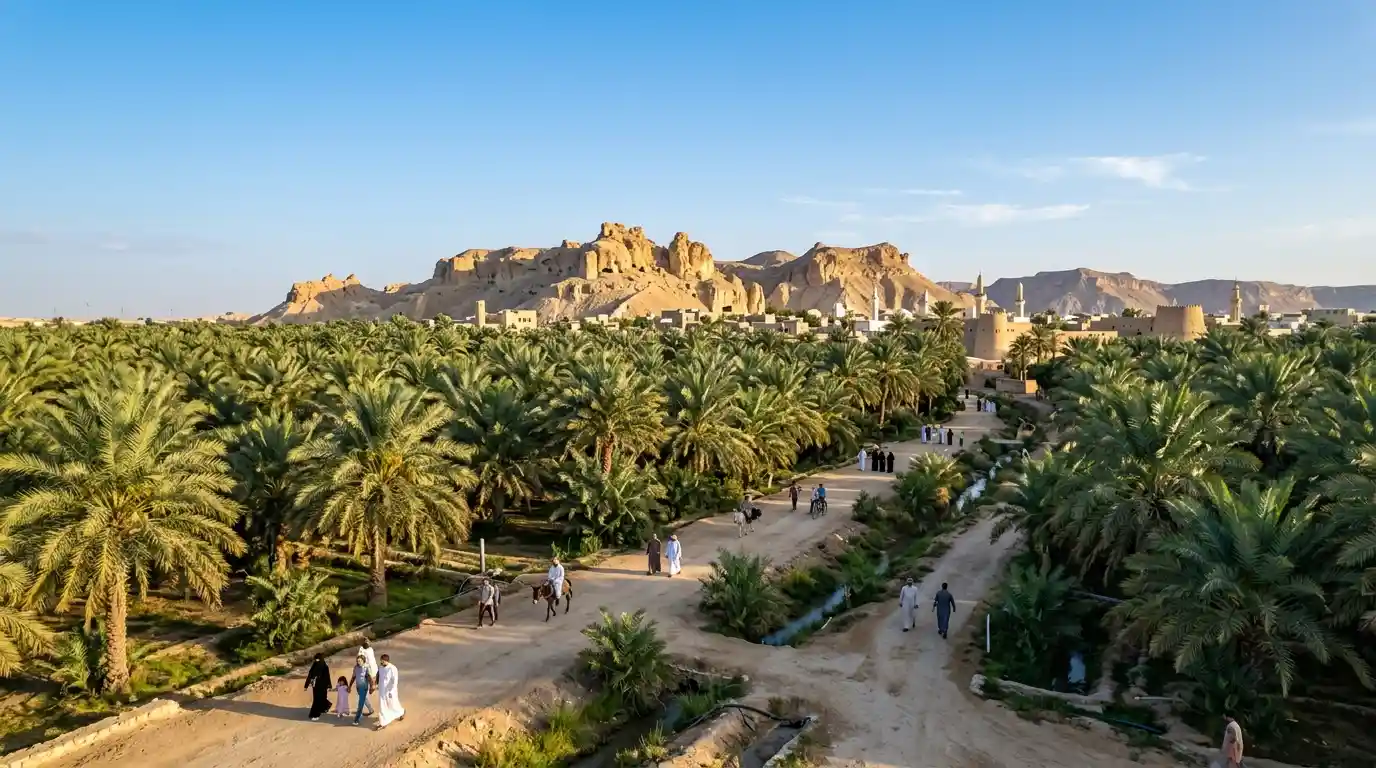
Al Ahsa itself is an unusual destination to plan seasonally because the UNESCO-listed cultural landscape encompasses gardens, canals, springs, wells, historic buildings, archaeological sites and an enormous date-palm ecosystem rather than a single enclosed attraction. UNESCO describes more than 2.5 million date palms within the oasis landscape, so climate directly influences a large portion of the visitor experience.
For broad destination preparation before choosing dates, use the Al Ahsa travel guide. Once your season is decided, the Al Ahsa itinerary helps arrange Hofuf, the oasis, Al Qarah and the more remote nature stops efficiently.
Best Time to Visit Al Ahsa at a Glance
| Period | Overall conditions | Best for |
|---|---|---|
| November–March | Mildest and most comfortable | First visits, heritage, oasis walks, families |
| December–February | Coolest part of the year | Long outdoor days, desert excursions, walking |
| March | Mild to increasingly warm | Outdoor activities with warmer afternoons |
| April | Transitional and warmer | Flexible sightseeing with earlier starts |
| May–September | Very hot | Date culture, indoor-focused visits, heat-tolerant travelers |
| Late August–October | Hot to gradually improving | Date harvest and agricultural interest |
| October | Transitional | Travelers balancing warmer weather with improving comfort |
This is intentionally a decision-focused overview rather than a detailed climate table. Travelers who need granular seasonal conditions should use Al Ahsa weather by month, which owns the detailed weather-reference intent.
November to March Is the Best Overall Travel Window
For a conventional sightseeing trip, the best time to visit Al Ahsa is November through March because nearly every major experience becomes easier.
Walking through Qasr Ibrahim and central Hofuf is more comfortable, browsing Al Qaisariya requires less planning around intense afternoon heat, and exploring outdoor sections of the oasis can occupy a larger portion of the day. Al Qarah Mountain also becomes easier to combine with other attractions because reaching and walking around the site involves outdoor exposure even though some cave passages feel noticeably moderated compared with the exterior.
Visit Saudi explicitly recommends this November-to-March window for comfortable weather and identifies March as particularly pleasant for outdoor and family activities.
This period is also the best time to visit Al Ahsa if you are making your first trip and do not yet know which attractions will interest you most. Mild conditions give you flexibility to change the itinerary without being forced indoors during the middle of every day.
Travelers still selecting experiences can use things to do in Al Ahsa before deciding how many outdoor blocks the trip requires.
December Through February for the Coolest Sightseeing
Travelers who place maximum priority on comfortable daytime walking will generally find the central winter period the best time to visit Al Ahsa.
Visit Saudi’s current climate summary gives a broad winter predicted range of roughly 9–24°C, substantially below the conditions found during the hot season.
Those temperatures make an important practical difference. Instead of moving directly between an air-conditioned vehicle and each attraction, you can spend longer walking around historic Hofuf, slow down in the oasis and remain outside during the middle portion of the day when conditions permit.
Cooler evenings may require a light extra layer, particularly for travelers accustomed to consistently warm Gulf weather. Desert and open landscapes can also feel noticeably cooler once sunlight disappears.
For visitors planning an architecture-heavy trip, this cooler period is especially suitable for exploring destinations covered in historical places in Al Ahsa.
November Is Excellent for Warm but Comfortable Conditions
November can be the best time to visit Al Ahsa for travelers who want warmth without the intensity of summer.
Autumn conditions progressively moderate, while the oasis remains visually lush because the date-palm landscape is evergreen rather than dependent on one short green season. UNESCO emphasizes the continuing agricultural character of the oasis, where date palms, other crops, water-management systems and inhabited settlements remain part of the living cultural landscape.
The practical advantage is flexibility. Heritage walking, market exploration and outdoor photography become more comfortable, but evenings typically retain the feeling of a warm-weather destination.
November can also work well for travelers continuing through the Eastern Province because the difference between inland oasis sightseeing and Gulf waterfront destinations becomes easier to enjoy without extreme daytime heat.
March Is One of the Best Months for Outdoor Variety
March is another strong candidate for the best time to visit Al Ahsa because it combines relatively comfortable weather with warmer afternoons.
Visit Saudi specifically highlights March for breezy afternoons, clearer skies and outdoor or family activities.
This makes the period especially useful when your plans combine several different environments. You might walk through Hofuf heritage in the morning, explore palm landscapes later and spend another part of the trip around Al Qarah without needing to design the entire schedule around avoiding heat.
Temperatures can nevertheless rise as spring develops, so travelers visiting toward the warmer edge of the season should still prioritize outdoor sightseeing earlier in the day when possible.
Families planning around school schedules can compare attraction suitability separately in Al Ahsa with kids.
April Is a Transitional Choice
April is not usually the absolute best time to visit Al Ahsa, but it can still be a practical choice for travelers comfortable with warmer weather.
Spring temperatures rise quickly in the Eastern Province. Visit Saudi’s broad seasonal forecast spans approximately 15–38°C for spring, illustrating how dramatically conditions can change between cooler mornings and warmer afternoons.
A successful April trip therefore relies more heavily on timing. Put exposed heritage areas, oasis walks and outdoor photography earlier in the day, then shift covered markets, restaurants, cafes or indoor experiences into warmer periods.
Al Qaisariya Souq is particularly useful in this kind of schedule because its covered market environment can complement more exposed sightseeing.
The best time to visit Al Ahsa in April is consequently less about choosing the perfect week and more about designing each day intelligently.
May Through September Is the Most Challenging Period for Sightseeing
For most leisure visitors, the hottest months are not the best time to visit Al Ahsa.
Visit Saudi’s current destination guide gives a broad predicted summer range of approximately 26–45°C, while Saudi Arabia’s National Center for Meteorology regularly records very high maximum temperatures in Al Ahsa during periods of intense summer heat.
Extended outdoor sightseeing becomes considerably more demanding under those conditions. Qasr Ibrahim may still be worth visiting, and the caves at Al Qarah provide a distinctive experience, but walking between attractions, exploring agricultural areas and undertaking desert excursions require far more careful heat management.
Travelers visiting during this period should start outdoor activities early, rest during the most uncomfortable hours and return outside later when conditions moderate.
The best time to visit Al Ahsa for a general first-time tourist remains the cooler season. Summer should be chosen because your travel dates require it or because a particular seasonal experience matters enough to justify the heat.
Summer Has One Major Advantage: Date Culture
Although summer is usually not the best time to visit Al Ahsa for comfortable sightseeing, it is one of the most culturally interesting periods for travelers fascinated by palms and dates.
Fresh-date harvest activity begins during the hotter part of the year, and Saudi agricultural authorities identify Al Ahsa as one of the major regions participating in the seasonal progression of early and mid-season date harvests.
The agricultural experience is meaningful because dates are not merely a tourist product. UNESCO describes date cultivation as central to the continuing cultural and agricultural identity of Al Ahsa Oasis.
Visitors during the hot season may encounter fresh rutab in markets and a visibly active agricultural economy that is much less obvious during cooler months.
This creates an important tradeoff: summer provides a stronger connection with the crop that defines the oasis, but much less comfortable sightseeing weather.
Late August Through October for the Main Date Harvest Atmosphere
For agricultural travelers, the best time to visit Al Ahsa may be the principal date-harvest period rather than winter.
Saudi Press Agency describes Al Ahsa’s annual main harvest as typically extending from late August through the end of October, with farmers cutting, sorting and transporting dates while markets and associated agricultural activity become particularly important.
Conditions during much of this period remain hot, especially near the beginning. October becomes increasingly attractive because it combines harvest-related cultural interest with progressively more manageable outdoor weather.
Travelers specifically interested in Khalas dates and oasis agriculture may therefore accept a higher temperature tradeoff.
Do not assume that one festival, auction or public agricultural event occurs on exactly the same dates every season. Harvest rhythms are relatively predictable, but individual visitor programs should always be checked close to travel.
October Is an Underrated Shoulder Period
October can be a sensible best time to visit Al Ahsa for travelers who want a compromise between agricultural atmosphere and improving weather.
The beginning of the month may still feel intensely warm, whereas later conditions tend to move toward the more comfortable autumn-to-winter transition. Visit Saudi’s broad autumn prediction extends as high as the upper 30s Celsius, so October should not be mistaken for cool weather simply because summer has ended.
The advantage is that date-related activity can still form part of the destination’s cultural environment while the approach of the cooler season gradually increases the amount of time visitors can comfortably spend outdoors.
A flexible October trip works particularly well if you are prepared to move outdoor sightseeing to morning and evening.
Best Time to Visit Al Ahsa for Qasr Ibrahim and Hofuf Heritage
For historic architecture, the best time to visit Al Ahsa is during the cooler period from November through March.
Qasr Ibrahim, Al-Koot and other heritage areas benefit from slow walking rather than rapid air-conditioned transfers. Comfortable temperatures make it easier to look at façades, courtyards, mosque architecture and the relationship between historic buildings and surrounding streets.
The cooler season also gives photographers more freedom to wait for appropriate light rather than shooting quickly simply to escape the heat.
Heritage sites can still be visited during warmer periods, but the schedule needs greater discipline.
If history is your primary interest, connect this seasonal decision with the detailed Al Ahsa itinerary so central Hofuf sights stay together rather than requiring unnecessary cross-oasis driving.
Best Time to Visit Al Ahsa for Al Qarah Mountain
The best time to visit Al Ahsa for Al Qarah Mountain is generally during the cooler months, although the mountain can remain appealing across a wider portion of the year.
The cave passages are known for moderated internal conditions compared with the exposed exterior, which can make Al Qarah more manageable than a completely open desert attraction when temperatures rise. Even so, visitors still have to move through outdoor parking, approach areas and exposed sections of the mountain environment.
Visit Saudi continues to identify Al Qarah among Al Ahsa’s principal cultural and natural attractions.
Winter and early spring therefore offer the easiest complete experience, especially if you want to combine the mountain with the oasis or another outdoor attraction on the same day.
Best Time to Visit Al Ahsa for Al Asfar Lake
For Al Asfar Lake, the best time to visit Al Ahsa is during the cooler season.
The attraction combines water, reeds, open desert and sand, which means there is considerably less shelter from high temperatures than in a covered heritage district.
Desert access is also part of the experience. Visitors should use a suitable current route and verify terrain conditions rather than assuming an ordinary vehicle can follow every sandy approach.
Cooler weather makes photography, bird observation and time beside the lake far more comfortable.
Travelers interested in the lake should still verify current conditions shortly before departure because access, sand and weather can change more quickly than they do at an urban attraction.
Best Time to Visit Al Ahsa for Families
For most families, November through March is the best time to visit Al Ahsa.
Children can spend longer at Al Qarah, the oasis and open heritage sites without the entire day revolving around escaping intense heat. Families also gain more flexibility to combine outdoor and indoor experiences instead of making every transfer temperature-driven.
The cooler months are particularly useful for families with younger children, who may struggle with long walks through exposed environments even when adults consider the heat manageable.
The destination’s family suitability is broader than the season alone, so use the dedicated Al Ahsa with kids guide when selecting age-appropriate attractions.
Best Time to Visit Al Ahsa for Photography
Photographers should consider both temperature and light.
The cooler season is the best time to visit Al Ahsa for long photography days because you can remain outdoors through more of the day. Early morning and late afternoon are still the most attractive periods for warm light across palms, earth-toned architecture and limestone formations, but you are not forced to abandon outdoor locations as quickly.
Winter may also produce a softer overall atmosphere than the most intense summer conditions.
For Al Asfar Lake and desert landscapes, allow additional time around sunrise or sunset rather than trying to combine the location with a dense urban itinerary.
The palm oasis itself works visually in every season because the cultural landscape remains agricultural and inhabited rather than becoming dormant after one brief green period.
Best Time to Visit Al Ahsa for Budget Travelers
There is no reliable single seasonal rule that guarantees the lowest accommodation price, because rates respond to weekends, holidays, events and individual hotel demand.
Budget travelers should therefore not choose extreme summer heat purely on the assumption that every hotel will automatically be cheaper.
A better strategy is to compare live accommodation for several weekday combinations within your acceptable season, avoid major event periods when flexibility permits and balance room rates against the cost of extra taxis, indoor entertainment or shortened outdoor days.
Use where to stay in Al Ahsa for accommodation-area tradeoffs rather than turning seasonal planning into an unreliable hotel-price forecast.
Travelers prioritizing no-cost attractions can also use free things to do in Al Ahsa.
When Is Al Ahsa Most Crowded?
There is no useful official month-by-month crowd index for Al Ahsa that should be treated as a precise forecasting tool.
Instead, expect crowding to respond strongly to comfortable weather, weekends, school breaks, religious holidays, agricultural events and other temporary programming. The same November-to-March conditions that make sightseeing easier can naturally increase demand for popular outdoor attractions.
Al Qaisariya, major heritage landmarks and family-oriented places may feel particularly active during evening and weekend periods.
If lower crowds matter, visiting key sights earlier in the day and favoring ordinary weekdays can be more useful than attempting to identify one supposedly empty month.
The best time to visit Al Ahsa for low crowds therefore depends partly on the current events calendar rather than climate alone.
Ramadan and Eid Can Change the Daily Rhythm
If your visit overlaps Ramadan or an Eid period, expect daily routines to differ from an ordinary travel week.
Restaurant activity, shopping patterns and attraction opening hours may shift, while evenings can become considerably more socially active.
Because the Islamic calendar moves relative to the Gregorian calendar, these periods should never be tied permanently to one particular month in a reusable travel guide.
Check current opening hours shortly before the trip and build additional flexibility into the schedule.
This does not necessarily make Ramadan a bad time to visit. It simply changes how the destination should be experienced.
Watch for Dust, Wind and Short-Term Weather Changes
Seasonal averages cannot tell you exactly what conditions will occur during your visit.
The National Center for Meteorology provides live Al Ahsa forecasts and early-warning information, including alerts related to phenomena such as raised dust.
Check the forecast shortly before exposed activities, particularly Al Asfar Lake, desert driving, long oasis walks and outdoor photography.
Reduced visibility can make a landscape-focused excursion disappointing even when the temperature itself is comfortable.
This is another reason the best time to visit Al Ahsa should be treated as a seasonal recommendation rather than a guarantee of perfect weather.
Choosing Between Winter, Spring and Autumn
Winter is the easiest choice for most travelers because it maximizes outdoor comfort.
Early spring is excellent when you prefer warmer afternoons but still want substantial outdoor time.
Late autumn offers a similar compromise and may overlap with the later part of the date-harvest atmosphere.
Summer works best for travelers with a specific agricultural interest, unavoidable travel dates or a willingness to restructure sightseeing around intense heat.
If you are undecided, choose the cooler season. It gives the broadest access to the experiences that make Al Ahsa distinctive.
How the Season Changes an Al Ahsa Itinerary
The best time to visit Al Ahsa affects more than clothing. It should change the structure of the day.
During cool weather, the itinerary can flow naturally from morning heritage sightseeing into oasis exploration, Al Qarah and an evening market.
During hotter conditions, exposed attractions need to move toward morning and late afternoon, while Al Qaisariya, meals, accommodation breaks and other sheltered experiences occupy the hottest hours.
Travelers with a fixed short stay can use one day in Al Ahsa for the compressed itinerary, while 2 days in Al Ahsa allows weather-sensitive attractions to be distributed more comfortably.
Visitors staying longer can use 3 days in Al Ahsa to create even more flexibility around desert and oasis conditions.
Getting Around Matters More in Hot Weather
The best time to visit Al Ahsa also changes how dependent you may become on private transport.
Al Ahsa is geographically spread out, and attractions such as central Hofuf, Al Qarah, Jawatha and Al Asfar Lake do not form one walkable district.
During cooler conditions, visitors can comfortably add more walking once they arrive at individual areas. During hotter periods, efficient point-to-point transport becomes more important because even relatively short exposed walks can feel demanding.
Use getting around Al Ahsa when deciding between driving, taxis and other local transport arrangements.
Combining Al Ahsa With the Eastern Province
The best time to visit Al Ahsa is also a good consideration when building a wider Eastern Province trip.
The oasis is inland and can become much hotter than travelers expect, while Gulf cities provide a different coastal environment. Combining several destinations during the cooler season generally makes outdoor sightseeing easier across the entire route.
Travelers continuing toward the coast can use the Dammam travel guide for a larger urban base, the Al Khobar travel guide for waterfront-oriented sightseeing or the Qatif travel guide for Tarout, Darin and coastal heritage.
Each destination should retain its own itinerary rather than being squeezed into Al Ahsa as a nominal day attraction.
What to Pack by Season
During the cooler season, bring light daytime clothing plus an additional layer for cool mornings or evenings. Comfortable walking shoes remain useful throughout the year because heritage areas, markets, mountain passages and oasis environments involve more walking than many first-time visitors expect.
During warmer periods, prioritize breathable modest clothing, strong sun protection and sufficient water.
A hat and sunglasses are useful for exposed desert and oasis environments, while a light layer can still be valuable indoors where air-conditioning feels much cooler than the outside temperature.
Photography equipment should be protected from dust, particularly during periods when winds increase.
Practical Seasonal Planning Tips
Check current forecasts shortly before the trip rather than relying entirely on historical averages. The National Center for Meteorology provides live conditions and alerts for Al Ahsa.
Choose November through March when outdoor comfort is your first priority.
Select December through February when you particularly value cooler daytime walking.
Consider March or November if you want warmth without the strongest summer heat.
Choose the late-summer-to-autumn harvest period only when date culture is important enough to justify hotter conditions.
Keep Al Asfar Lake and other exposed desert experiences away from the hottest part of the day.
Confirm attraction hours during Ramadan, Eid and event periods.
Do not assume summer automatically guarantees cheaper hotels.
Leave enough flexibility to swap an exposed activity with a market, restaurant or other sheltered stop when weather becomes less comfortable.
For country-level seasonal context beyond the oasis, the Saudi Arabia travel guide helps compare Al Ahsa with destinations whose climates differ substantially.
Frequently Asked Questions About the Best Time to Visit Al Ahsa
What is the best time to visit Al Ahsa overall?
For most travelers, the best time to visit Al Ahsa is from November through March. Visit Saudi currently identifies this period as the most comfortable for outdoor activities and general sightseeing because winters are significantly milder than the very hot summer season.
What are the coolest months in Al Ahsa?
The central winter period provides the coolest overall conditions. Visit Saudi currently gives a broad predicted winter temperature range of approximately 9–24°C, although actual daily weather can vary.
Is March a good time to visit Al Ahsa?
Yes. March can be one of the best times to visit Al Ahsa for travelers who prefer warm but generally manageable outdoor conditions. Official destination guidance specifically highlights March for outdoor and family activities.
Is summer a bad time to visit Al Ahsa?
Summer is challenging for conventional sightseeing because temperatures can become extremely high. However, travelers specifically interested in fresh dates and agricultural activity may find the hot season culturally rewarding because harvest activity begins during this period.
When is date harvest season in Al Ahsa?
The principal annual harvest typically becomes especially active from late August through October, although fresh-date varieties begin appearing earlier. Exact harvest timing varies by variety and agricultural conditions.
When is the best time to visit Al Ahsa for Al Qarah Mountain?
November through March is generally the easiest period because outdoor conditions around the mountain are more comfortable. The caves can feel moderated compared with the exterior, but visitors still spend time in exposed outdoor areas.
When is the best time to visit Al Ahsa for Yellow Lake?
The cooler months are preferable because Al Asfar Lake involves exposed desert surroundings and potentially sandy access. Check current weather, terrain and access before making the excursion.
Is Al Ahsa crowded in winter?
Winter’s comfortable conditions can make popular attractions and event periods busier, especially on weekends, but there is no authoritative month-by-month crowd index that should be treated as precise. Travelers seeking quieter conditions should prioritize ordinary weekdays and earlier sightseeing periods.
Is October a good time to visit Al Ahsa?
October can work well, particularly for travelers interested in date culture, but early October may still be hot. Conditions generally become more comfortable as the cooler season approaches.
Should families avoid Al Ahsa in summer?
Families can still visit, but the itinerary requires substantially more heat management. For most families, November through March is the best time to visit Al Ahsa because parks, heritage areas, the oasis and Al Qarah are easier to combine comfortably.
Choosing the Best Time to Visit Al Ahsa
For the majority of travelers, the decision is straightforward: November through March is the best time to visit Al Ahsa because the cooler weather lets the destination function as it should. You can walk through Hofuf’s heritage areas, spend meaningful time among the palms, explore Al Qarah and consider desert landscapes without structuring every hour around extreme heat.
The best time to visit Al Ahsa changes when your priority changes. Photographers and families should lean strongly toward the cool season. Travelers who enjoy warmer conditions may prefer November or March. Agricultural enthusiasts can accept hotter late-summer and autumn weather in exchange for the atmosphere of date harvest.
That agricultural dimension matters because Al Ahsa is not simply a collection of tourist attractions. UNESCO describes an interconnected cultural landscape of millions of date palms, water-management systems, settlements, heritage buildings and archaeological sites whose identity remains rooted in continuing oasis life.
Choose the season according to the experience you actually want, then use the Al Ahsa itinerary to organize the route and where to stay in Al Ahsa to select a base that fits it. With the weather and geography working in your favor, Al Ahsa becomes far easier to appreciate as both a historic destination and one of the Arabian Peninsula’s great living oasis landscapes.