Best Things to Do in Al Qassim: Sights, Activities & Experiences
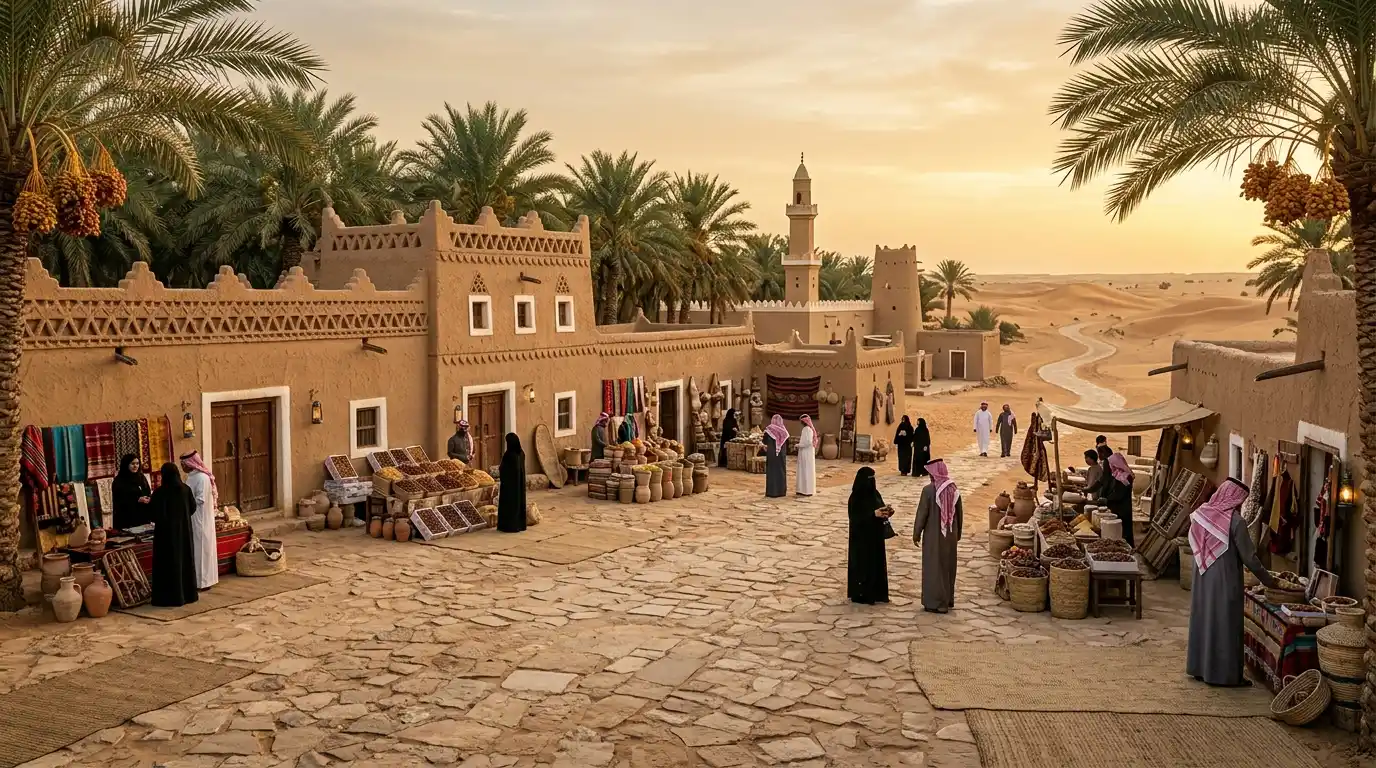
The best things to do in Al Qassim reveal a side of Saudi Arabia shaped less by monumental sightseeing and more by date farms, traditional markets, mud-brick settlements, Najdi architecture, heritage museums and everyday regional culture. Spread across Buraidah, Unaizah, Al Mithnab, Uyun Al Jawa and other towns, Al Qassim rewards travelers who are prepared to explore beyond a single city and combine cultural landmarks with agricultural landscapes, local food and relaxed outdoor experiences.
For a first visit, prioritize Al Mithnab Traditional Village, Al Musawkaf Traditional Market, Al Bassam Heritage House, the palm-filled environments of Unaizah, heritage sites around Uyun Al Jawa, museums in and around Buraidah, and a date or farm experience when seasonal conditions allow. Al Qassim is particularly associated with agriculture and dates, while official Saudi tourism information also highlights its historic villages, markets and family-oriented green spaces.
Travelers planning a wider trip through the Kingdom can place the region in context with the Saudi Arabia travel guide, while the Al Qassim travel guide covers the broader destination-planning questions that sit outside this activities-focused guide.
Best Things to Do in Al Qassim at a Glance
| Experience | Best for | Why consider it |
|---|---|---|
| Al Mithnab Traditional Village | Heritage and architecture | Mud-brick streets, traditional buildings and regional history |
| Al Musawkaf Traditional Market | Shopping and local culture | Traditional crafts, market atmosphere and heritage design |
| Al Bassam Heritage House | Architecture and museums | A strong introduction to Unaizah’s architectural heritage |
| Palms Avenue | Walking and relaxation | Palm-filled surroundings with a slower local atmosphere |
| Buraidah date experience | Food and seasonal culture | Connects directly with Al Qassim’s agricultural identity |
| Uyun Al Jawa | Quiet heritage exploration | Traditional settlement character away from the busiest centers |
| Museums in Buraidah | History and indoor sightseeing | Useful context for trade, regional culture and local history |
| Desert and outdoor experiences | Nature and photography | Open landscapes, camping potential and evening skies |
The important point is that the best things to do in Al Qassim are geographically dispersed. This is not a destination where every major attraction sits within a compact historic center. Buraidah may serve as a practical base, but Unaizah, Al Mithnab and smaller heritage communities add much of the character that makes the region distinctive. Official tourism guidance likewise presents Qassim as a regional journey through farms, traditional villages, markets, heritage attractions and palm landscapes rather than as a single-city sightseeing circuit.
Explore Al Mithnab Traditional Village
Among the most culturally rewarding things to do in Al Qassim is visiting Al Mithnab Traditional Village, where mud-built structures, narrow passages and the old market environment preserve an architectural language associated with traditional Najdi settlements. The village is not simply an isolated monument; its appeal comes from seeing houses, courtyards, market spaces and community architecture together, which makes it easier to understand how regional towns functioned before contemporary urban expansion.
Official tourism material describes Al Mithnab as a heritage destination showcasing traditional Qassim life, with old mud houses, local cultural displays and Souq Al Majlis forming part of the experience. Saudipedia also identifies the settlement as one of the province’s prominent heritage villages and notes the concentration of traditional buildings and market spaces within it.
Allow yourself time to walk rather than treating Al Mithnab as a quick photo stop. Texture is a major part of the experience: earthen walls, timber details, shaded passages, small doors, courtyards and the relationship between mosque, market and residential spaces. Travelers primarily interested in architecture should also explore Arabian Nova’s guide to historical places in Al Qassim, which can go deeper into individual heritage sites without turning this broad activities page into a historical inventory.
Because opening arrangements and cultural programming can change, confirm the current official visitor information before making a dedicated drive to the village.
Wander Through Al Musawkaf Traditional Market in Unaizah
Traditional markets are central to understanding the region, and Al Musawkaf in Unaizah is one of the most accessible places to experience that connection. Its appeal goes beyond buying souvenirs. The market environment brings together regional craft traditions, architectural references, small shops and local products in a setting intentionally tied to Qassim’s commercial heritage.
Visit Saudi describes Al Musawkaf as a traditional market associated with Al Qassim’s handicrafts, local food and architectural character. That makes it one of the more versatile things to do in Al Qassim for travelers who want culture without committing to a lengthy museum visit.
Visit with enough flexibility to browse rather than arriving with a rigid shopping list. Markets can feel quite different depending on the time of day, seasonal activity and whether cultural events are taking place. If your interests extend beyond sightseeing into the region’s everyday cultural identity, the dedicated guide to culture and heritage in Al Qassim offers a more focused route into those traditions.
Step Inside Al Bassam Heritage House
Al Bassam Heritage House in Unaizah is one of the most useful stops for travelers who want to examine traditional architecture at closer range. Whereas a heritage village provides a wider urban context, a preserved house allows you to concentrate on domestic spaces, materials, room arrangement and the architectural details that helped buildings respond to the climate and social patterns of central Arabia.
Visit Saudi presents Al Bassam Heritage House as an architectural heritage attraction in Unaizah and categorizes it as suitable for museum visitors, families and friends. Current access arrangements and opening times can change, so check the official listing shortly before visiting rather than relying on an old schedule.
Al Bassam also fits naturally into a heritage-focused day in Unaizah because it can be combined with Al Musawkaf and palm-oriented attractions without crisscrossing the entire province. Travelers who especially enjoy collections, historic objects and indoor interpretation can use the broader guide to museums in Al Qassim to compare additional museum options.
Slow Down Along Palms Avenue
Not every entry on a list of things to do in Al Qassim needs to be a formal historical attraction. Palms Avenue in Unaizah offers a quieter experience built around walking, greenery and the agricultural landscape that forms such an important part of the region’s identity.
Visit Saudi describes Palms Avenue as an experience among Unaizah’s palm groves, while its broader Qassim coverage specifically identifies the area as one of the region’s attractive green spaces. Official bookable itineraries also pair it with Al Musawkaf and Al Bassam Heritage House, making those three stops a practical combination for visitors exploring Unaizah.
This is especially worthwhile if your sightseeing schedule is becoming too museum-heavy. A palm-filled walking area gives the day a different rhythm, while cafes and surrounding local businesses can make the stop feel more relaxed. For travelers who build trips around coffee stops and evening social spaces, Arabian Nova’s guide to the best cafes in Al Qassim separates that specific intent from the general sightseeing covered here.
Discover the Heritage of Uyun Al Jawa
Travelers prepared to leave the main Buraidah–Unaizah axis should consider Uyun Al Jawa. The area’s attraction lies in its quieter traditional character and surviving heritage environment, making it suitable for visitors who prefer less hurried exploration.
Visit Saudi highlights Uyun Al Jawa’s old settlement, traditional architecture, historic mosque environment, former educational spaces and traditional market. The destination offers a useful contrast with larger urban centers because the experience is closely tied to the scale and structure of an older regional community.
Among the things to do in Al Qassim, this is a particularly good choice for travelers interested in photography, architecture and place-based history. You do not need to turn the visit into a checklist. Walking slowly, observing building forms and understanding how mosque, market and residential functions relate to one another can be more rewarding than trying to document every structure.
Those looking deliberately for smaller or less obvious stops can continue with the separate guide to hidden gems in Al Qassim rather than expanding this broad page into an exhaustive list of minor sites.
Experience Buraidah’s Date Culture
Dates are not a decorative tourism theme in Al Qassim; agriculture is fundamental to the region’s identity. A visit connected with Buraidah’s date trade can therefore be one of the most locally meaningful things to do in Al Qassim, particularly during the active harvest and market season.
Visit Saudi describes Qassim as a major date-growing region and highlights the seasonal Buraidah date carnival among its signature experiences. The exact event schedule, programming and access arrangements vary, so travelers visiting specifically for the market or carnival should check the current official tourism calendar before committing to dates.
Even outside a major seasonal event, dates remain visible in local shops, markets, cafes and hospitality. Rather than simply buying a box and leaving, compare varieties, ask sellers about flavor and texture, and pay attention to how dates appear in local food culture. The broader food in Al Qassim guide covers culinary traditions in greater depth without duplicating them here.
Visit a Farm or Date-Growing Area
Agricultural experiences provide another way to understand why Al Qassim feels different from Saudi destinations dominated by coast, mountains or monumental heritage. Palm farms, date groves and agricultural properties soften the desert palette and connect many local experiences directly to the land.
Current Visit Saudi experiences in the region include farm visits and agricultural activities alongside heritage stops in Unaizah and Buraidah. Availability varies by property and season, so confirm that a farm genuinely welcomes visitors or book through an authorized experience rather than arriving unannounced at private agricultural land.
For families, a well-organized farm visit can be among the most approachable things to do in Al Qassim because it combines open space with a tangible cultural theme. Travelers with children can compare additional options in Al Qassim with kids, where family suitability can be assessed in more detail.
Explore the Museums of Buraidah and the Wider Region
Museums are particularly useful in Al Qassim because many of the region’s most interesting stories concern trade, agriculture, domestic life, travel and local society rather than one universally recognizable landmark. A museum early in your trip can therefore give context to what you later see in markets and heritage settlements.
One notable option is Al Oqilat Museum in Qassim, which Visit Saudi presents around the history of the Oqilat trading tradition. Al-Shimasiyah Heritage Museum is another officially listed cultural attraction in the region.
Museum opening arrangements can be more variable than those of major commercial attractions, particularly around holidays, prayer times, maintenance or private events. Check current information before setting out, especially if a museum requires a substantial drive.
If your trip is centered on Buraidah itself, use the dedicated guide to things to do in Buraidah to distinguish city-specific attractions from the province-wide things to do in Al Qassim covered on this page.
Spend Time in Al Qassim’s Parks and Green Spaces
Parks are easy to underestimate when planning a cultural trip, yet they are useful for understanding local leisure patterns and breaking up long driving days. Official tourism material highlights King Khalid Park and Al Qassim National Park among the region’s recreational spaces, while the wider northern-route guide identifies green areas and walking environments across Buraidah and neighboring towns.
A park stop makes particular sense in the late afternoon or evening when conditions are comfortable. Families may value play areas and open lawns, while travelers spending several days in the region may simply appreciate an hour without a structured attraction.
Some of the best things to do in Al Qassim are precisely these low-pressure experiences because they give you a clearer view of ordinary social life. Travelers trying to keep costs low can find additional ideas in free things to do in Al Qassim.
See Al Khabra’s Traditional Urban Heritage
Al Khabra is another worthwhile choice for travelers who want to understand the architectural history of the province beyond its best-known heritage sites. The historic settlement is associated with traditional mud-brick urban fabric on the northern side of Wadi Al Rummah and contains a substantial concentration of historic houses.
Saudipedia lists Al Khabra among the prominent heritage towns of Qassim and describes a large traditional settlement composed of hundreds of mud-built houses.
The experience overlaps thematically with Al Mithnab, so travelers with limited time do not necessarily need both. Choose Al Mithnab if you want one of the region’s headline heritage environments; consider adding Al Khabra when historic architecture is one of your main reasons for visiting.
That kind of prioritization is important because a good list of things to do in Al Qassim should help you decide what to skip as well as what to see.
Visit the Cultural Heritage Center
For travelers who prefer interpreted cultural spaces, the Cultural Heritage Center provides another route into the identity and history of the region. Visit Saudi describes the center as a platform presenting Al Qassim’s cultural identity and historical heritage.
A center like this is particularly useful at the beginning of a heritage-oriented trip because interpretation can make later visits to old villages, traditional markets and museums more meaningful. Conversely, if you have already spent substantial time in regional museums, you may prefer to devote that time to outdoor or agricultural experiences instead.
Make Time for Local Food
Eating well should be considered part of the sightseeing rather than simply a break between attractions. Al Qassim’s association with dates and agriculture is visible across its food culture, while traditional restaurants, contemporary Saudi dining and cafes provide different ways to engage with the region.
Instead of trying to turn this article into a restaurant directory, use the guide to the best restaurants in Al Qassim when you need specific dining choices. The important planning principle is to leave enough flexibility for a proper meal rather than scheduling every attraction back-to-back.
Combining heritage sightseeing with local food is one of the easiest ways to make the things to do in Al Qassim feel connected rather than fragmented. A market visit, heritage house, traditional meal and evening coffee can together communicate more about the region than another hour spent rushing between distant attractions.
Add a Desert Experience
Al Qassim’s urban and agricultural heritage receives much of the attention, but desert landscapes provide another dimension. Depending on conditions and the experience selected, travelers can consider desert drives, organized outings, camping or evening observation of the open landscape.
For activities involving remote terrain, do not assume an ordinary rental car is suitable. Road conditions, sand, weather, communications coverage and vehicle requirements matter. Travelers specifically interested in organized off-road activities should use the desert safari in Al Qassim guide rather than treating this general sightseeing page as technical desert-driving advice.
Independent outdoor travelers can also compare the separate guides to camping in Al Qassim and stargazing in Al Qassim before choosing a remote location.
Look for Strong Photography Locations
Traditional mud architecture, palm groves, markets, desert horizons and old settlement streets give photographers considerable variety. Early morning and late-afternoon light generally creates more texture on earthen buildings than harsh overhead sun, while evening market activity can provide stronger atmosphere than a quiet midday visit.
Photography at heritage and religious sites should remain respectful. Ask before photographing people closely, obey restrictions inside museums or private properties, and avoid disrupting worship or private family spaces.
Travelers planning a photo-led trip can narrow the choices through the guide to Al Qassim photography spots, which keeps location-specific photography intent separate from this broader overview of things to do in Al Qassim.
How to Choose What to Do in Al Qassim
The right combination depends heavily on why you are visiting. Heritage-focused travelers should prioritize Al Mithnab, Uyun Al Jawa, Al Bassam Heritage House, Al Musawkaf and one or two museums. Those experiences collectively show settlement architecture, domestic design, markets, trade and regional cultural traditions without requiring you to see every historical site.
Families may prefer a lighter combination of Palms Avenue, a farm experience, parks, an accessible heritage attraction and a market. This reduces the amount of time spent inside museums while still giving children varied environments.
Travelers mainly interested in contemporary local life should focus more heavily on Buraidah and Unaizah, combining markets, cafes, parks, food and evening public spaces. Heritage attractions can then provide context without dominating the trip.
Outdoor travelers can combine agricultural landscapes with a properly planned desert experience, camping or stargazing, while photographers should allow extra time around mud-brick settlements and palm environments rather than trying to cover the maximum number of attractions.
If you are still deciding whether the region fits your interests at all, is Al Qassim worth visiting focuses specifically on that trip-decision question.
Getting Between Al Qassim Attractions
One of the most important practical considerations is distance. Attractions are distributed across several towns and governorates, so independent travelers should not plan Al Qassim as if it were a compact walkable city destination. Visit Saudi’s regional itinerary guidance identifies renting a car as the easiest way to explore the province’s dispersed attractions and villages.
A car provides the greatest flexibility, but travelers unfamiliar with local roads should think carefully about driving after dark or venturing into desert areas. Arabian Nova’s getting around Al Qassim guide covers the broader transport picture, while driving in Al Qassim addresses road-based planning more specifically.
Group attractions geographically whenever possible. For example, several Unaizah sights can be visited together without repeatedly returning to Buraidah. Likewise, a heritage excursion toward one of the smaller towns should be planned as a regional outing rather than inserted between unrelated city stops.
When to Plan Outdoor Activities
Season strongly affects how comfortable the things to do in Al Qassim feel. Official tourism information shows substantial temperature variation between cooler and hotter periods, so outdoor heritage walking, parks, farm visits and desert activities are generally easier to enjoy when daytime conditions are moderate.
During hotter conditions, shift outdoor exploration toward morning and later afternoon or evening, and reserve the middle of the day for museums, meals, cafes or rest. Carry drinking water, use sun protection and avoid assuming that a short distance on a map will be comfortable to walk in exposed heat.
For trip timing rather than sightseeing choices, consult best time to visit Al Qassim and the more detailed Al Qassim weather by month.
How Many Days Do You Need?
You can sample several major things to do in Al Qassim during a short visit, but the region becomes more rewarding when you have enough time to explore outside one city. Because Buraidah, Unaizah, heritage towns and rural attractions are spread out, adding time often improves the trip more than adding another tightly scheduled attraction.
For route planning, use the broad Al Qassim itinerary rather than attempting to convert this article into a day-by-day schedule. Travelers with a fixed stay can choose the matching one day in Al Qassim, 2 days in Al Qassim or 3 days in Al Qassim itinerary.
That separation matters: this page helps you identify the best experiences, while the itinerary pages determine how to sequence them.
Where Should You Base Yourself?
Buraidah is the most obvious base for many visitors because it is the provincial capital and gives convenient access to a range of urban services and attractions. Unaizah can also be appealing if your priorities include heritage architecture, markets, palm environments and a slightly different local setting.
Your ideal base depends on the balance between sightseeing and driving. Travelers planning excursions across the province may value road access and parking more than being able to walk to one specific attraction.
Accommodation areas and lodging styles are covered separately in where to stay in Al Qassim, allowing this article to remain focused on activities rather than hotel selection.
Practical Tips for Exploring Al Qassim
Do not assume that every heritage attraction operates on the same timetable. Opening hours, seasonal programs, restoration work and event access can change, especially at smaller cultural venues. Check current official information before a long drive.
Build buffer time into the day. A regional road trip often takes longer than the raw driving time suggests because meals, prayer periods, parking, photography and spontaneous market stops naturally slow the pace.
Dress respectfully in public and heritage environments, particularly around religious sites and traditional communities. Travelers should also remember that a historic mosque may remain a functioning place of worship rather than simply a visitor attraction.
For expensive or remote excursions, confirm exactly what is included before booking. Transport, meals, entry, guides and vehicle type can vary considerably between experiences.
Frequently Asked Questions About Things to Do in Al Qassim
What are the best things to do in Al Qassim for a first-time visitor?
For most first-time visitors, the strongest mix includes Al Mithnab Traditional Village, Al Musawkaf Traditional Market, Al Bassam Heritage House, Palms Avenue, a Buraidah museum or cultural stop and an experience connected with dates or farming. These choices provide a balanced introduction to heritage, agriculture, architecture and contemporary regional life.
What is Al Qassim best known for?
Al Qassim is strongly associated with agriculture, dates, traditional markets and Najdi cultural heritage. Official Saudi tourism material particularly emphasizes date farms, historic villages, regional markets and green spaces as defining aspects of the destination.
Is Buraidah the same as Al Qassim?
No. Al Qassim is the wider province, while Buraidah is its administrative capital and one of several destinations within the region. Many things to do in Al Qassim are outside Buraidah, including notable attractions in Unaizah, Al Mithnab and Uyun Al Jawa.
Is Unaizah worth visiting?
Yes, particularly if you enjoy heritage architecture, markets and palm-filled environments. Al Musawkaf Traditional Market, Al Bassam Heritage House and Palms Avenue make Unaizah one of the easiest areas to combine several different experiences within the wider Al Qassim trip.
Are there free things to do in Al Qassim?
Yes. Some heritage areas, public spaces, markets and walking environments may be accessible without a standard attraction ticket, although specific exhibitions or experiences can have separate charges. Access policies can change, so check current official information before visiting a specific venue.
What are the best things to do in Al Qassim with children?
Families can consider Palms Avenue, parks, suitable heritage villages, markets, museums and organized farm experiences. The best choice depends on the children’s ages, outdoor conditions and how much driving your family is comfortable doing.
Can you visit date farms in Al Qassim?
Visitor-oriented farm experiences are available in the region, but individual farms may be private or operate by booking. Use an established tourism experience or confirm permission in advance rather than entering agricultural property without arrangements. Visit Saudi currently features Qassim experiences that include farm visits and agricultural activities.
Do you need a car to explore Al Qassim?
A car is the most practical option for many independent visitors because major attractions are spread across several towns and rural areas. Official tourism guidance also recommends rental cars as an easy way to explore the region’s dispersed villages and attractions.
Are there things to do in Al Qassim besides heritage sightseeing?
Yes. Visitors can explore palm landscapes, parks, farm experiences, cafes, food, seasonal date activity, desert environments, camping and stargazing. The region works best when heritage attractions are combined with these slower outdoor and everyday experiences rather than treated as a museum-only destination.
What should I prioritize if I only have limited time?
Choose one strong heritage site, one Unaizah experience and one Buraidah or agricultural experience rather than attempting to cross the entire province. Al Mithnab, Al Musawkaf or Al Bassam Heritage House, followed by a palm, market or date-related stop, gives a more coherent introduction than a rushed checklist.
Making the Most of the Best Things to Do in Al Qassim
The strongest things to do in Al Qassim are connected by a common theme: understanding how agriculture, trade, traditional architecture and community life shaped the region. Al Mithnab’s mud-brick environment, Unaizah’s market and heritage architecture, Buraidah’s cultural institutions, palm landscapes and seasonal date activity all reveal different parts of the same regional story.
Avoid measuring the trip only by the number of attractions completed. Al Qassim is better suited to travelers who leave space for markets, coffee, meals, local conversations, walking and the changing atmosphere between city, palm grove, old settlement and desert edge. With sensible route planning and realistic driving times, the region can deliver one of central Saudi Arabia’s most distinctive combinations of heritage and everyday culture.