Al Baha Itinerary: How to Plan Your Visit
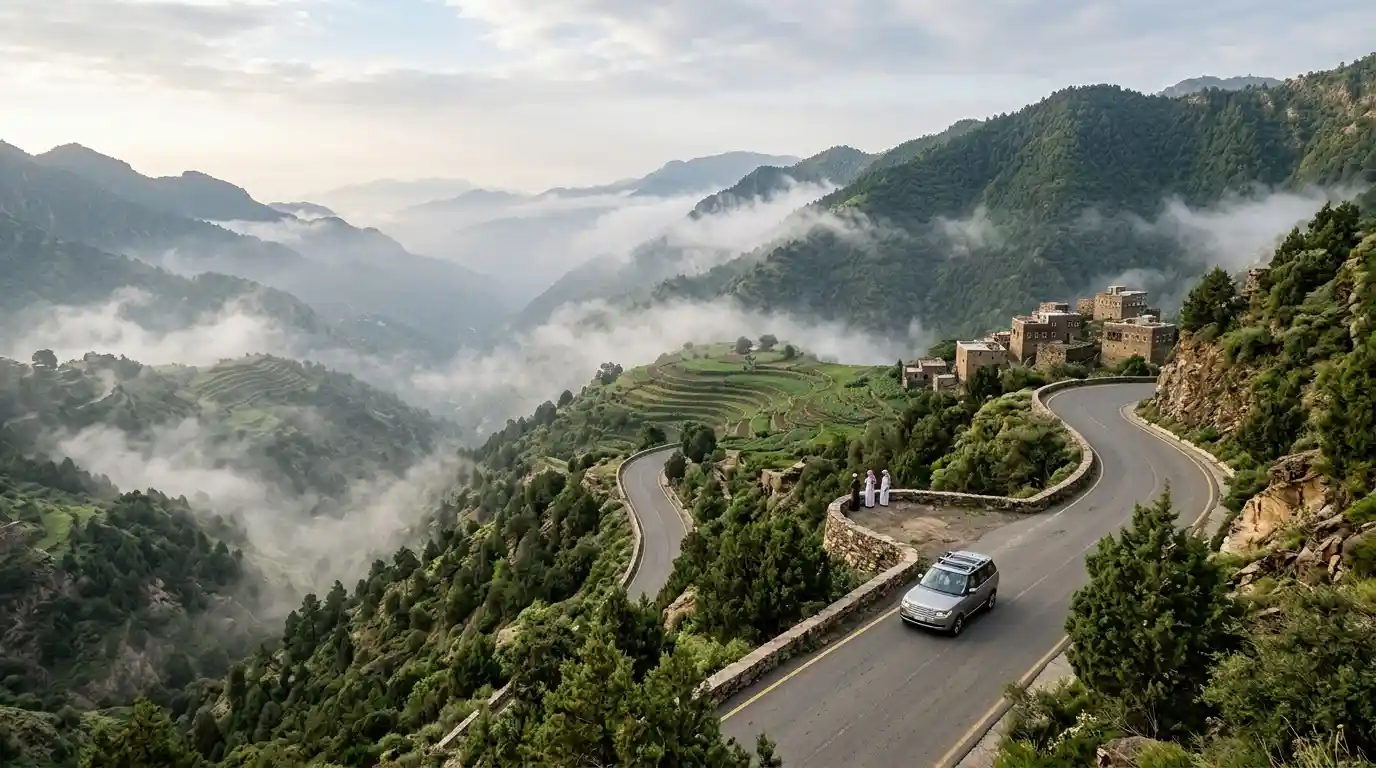
A successful Al Baha itinerary should be organized by elevation and geography rather than by simply ranking attractions. Al Baha city and nearby highland parks form one convenient cluster, Baljurashi and its surrounding landscapes form another, while Thee Ain Heritage Village and the Shada Mountains require more deliberate road planning. Trying to move repeatedly between these areas can turn a mountain trip into hours of unnecessary driving, especially when fog, rain, winding roads, viewpoints, meals, and spontaneous stops slow the journey.
The most practical Al Baha itinerary begins with a highland base, gives Raghadan Forest and the city-side parks their own block, combines compatible Baljurashi stops, and treats Thee Ain and Shada as substantial excursions rather than brief detours. Visit Saudi currently highlights Raghadan Forest, Prince Hussam Park, Thee Ain, the Shada Mountains, and Al Janabeen Dam among the region’s principal nature and heritage experiences, which makes them useful anchors when building a first route.
This page focuses on how to arrange those places efficiently. For the broad destination overview, start with the Al Baha travel guide. If you are still deciding which attractions interest you, use things to do in Al Baha first. Fixed schedules belong to the dedicated duration pages rather than this non-duration route-planning guide.
Understand the Geography Before Building an Al Baha Itinerary
Al Baha is not a compact sightseeing city where every major attraction sits a few minutes apart. The region combines the elevated Sarawat highlands with lower terrain toward Tihama, creating considerable changes in elevation over relatively short map distances. Those elevation changes affect temperature, vegetation, visibility, road gradients, and how long a journey actually feels.
This is why an Al Baha itinerary should distinguish between the highland city area and lower or more remote mountain excursions. Raghadan Forest sits conveniently near Al Baha city, while Thee Ain lies in Al Makhwah and the Shada mountain environment requires a more purposeful journey. Baljurashi adds another useful concentration of parks, markets, restaurants, and surrounding nature.
Do not calculate the route using straight-line distance alone. Mountain roads can contain long curves, steep descents, slow traffic, mist, and viewpoints that encourage stops. A route that looks modest on a digital map may occupy a substantial part of the day once you travel it comfortably.
For travelers who enjoy road travel as part of the experience, scenic drives in Al Baha provides a more focused look at the region’s driving landscapes.
Choose Your Base Before Choosing the Route
Accommodation location is one of the most consequential Al Baha itinerary decisions. For a first visit covering several parts of the region, staying in or close to Al Baha city usually provides the most flexible base. You remain close to services, restaurants, parks, and the main road network while still being able to make separate excursions toward Baljurashi, Al Makhwah, and Shada.
A highland accommodation can also be appealing if the primary objective is forest scenery, cooler air, mist, and quiet evenings. The tradeoff is additional driving whenever you want restaurants, shopping, or attractions elsewhere in the province.
Baljurashi can make sense for travelers concentrating more heavily on the southern side of the region, particularly if Al Janabeen Dam, local markets, restaurants, or nearby landscapes are important. There is no universally correct base; the best location depends on which geographic cluster dominates your Al Baha itinerary.
Use where to stay in Al Baha before booking. A hotel that appears close to several attractions by distance may still create inefficient mountain journeys if it sits on the wrong side of the routes you intend to use.
Make Raghadan Forest the Natural Highland Anchor
Raghadan Forest is one of the easiest major experiences to combine with an Al Baha city base. Visit Saudi currently describes it as a prominent highland forest with mountain views, mist, recreational facilities, family areas, walking opportunities, and additional activities; general admission is currently listed without a ticket.
For route planning, Raghadan should be treated as more than a ten-minute photo stop. The appeal comes from spending time in the forest environment, walking, taking in changing views, relaxing with family, or waiting for the mist and light to shift.
A good Al Baha itinerary can place Raghadan alongside other nearby city-side experiences rather than combining it with Thee Ain or Shada merely because all three involve nature. The geographic difference is significant enough that separating them usually creates a calmer route.
Travelers mainly interested in forests, waterfalls, mountains, and similar scenery can expand this part of the trip through nature spots in Al Baha. Families looking for developed recreational spaces can compare alternatives through parks in Al Baha.
Pair Prince Hussam Park With the City-Side Cluster
Prince Hussam Park belongs naturally in the same broad highland section of an Al Baha itinerary. Current Visit Saudi coverage presents it as an elevated landscaped park with views, walking areas, family facilities, greenery, cafés, and open recreation space.
The park is useful when the group includes travelers with different physical abilities. Someone who does not want a demanding mountain walk can still enjoy highland scenery, while families can use the developed environment for a slower part of the trip.
It also works well as a flexible stop rather than a rigid centerpiece. If fog reduces visibility elsewhere or a more ambitious excursion finishes earlier than expected, a city-side park gives the Al Baha itinerary somewhere worthwhile to absorb the remaining time without another major drive.
Visitors specifically interested in panoramas should use viewpoints in Al Baha rather than forcing every elevated stop into the general route.
Keep Heritage and Museums Together When Possible
Al Baha’s identity is strongly tied to traditional architecture, regional history, agriculture, markets, and mountain settlement patterns. A good Al Baha itinerary should preserve time for that cultural context instead of treating the region only as a green landscape.
The Regional Museum of Antiquities and Heritage provides an indoor introduction to the area’s historical development and is currently listed by Visit Saudi as accessible without a general admission ticket. It can work particularly well when weather is less suitable for a long outdoor excursion.
Combine museums and heritage-oriented city stops when geography allows rather than scattering them between forests and remote mountain journeys. Travelers who want greater historical depth should continue to historical places in Al Baha and culture and heritage in Al Baha.
The specialist museums in Al Baha guide can then help determine which collections deserve time in your route.
Give Thee Ain Heritage Village a Dedicated Excursion
Thee Ain Heritage Village is one of the places most likely to suffer from an overpacked Al Baha itinerary. It deserves enough time for the road journey, the surrounding landscape, the traditional stone buildings, the pathways through the settlement, and the agricultural environment below the village.
Visit Saudi presents Thee Ain as a major heritage destination in the Al Baha mountains, while Saudipedia places the historic village in Al Makhwah Governorate and describes its springs, vegetation, stone buildings, historic forts, and small mosque.
Because Thee Ain lies away from the immediate Al Baha city cluster, combine it only with stops that lie naturally along the same broader route. Do not visit Raghadan Forest, cross toward Thee Ain, return to the highlands for lunch, then head down again toward another southern attraction.
The drive also involves a significant elevation transition, which is part of the experience. Views can change from cooler highland scenery to warmer lower landscapes as the route descends.
If photography is important, allow enough time that you are not forced to leave simply because the next distant attraction is waiting. The village’s position on a pale rocky outcrop makes the surrounding landscape almost as important visually as the architecture itself.
Do Not Combine Thee Ain and Shada Automatically
Thee Ain and the Shada Mountains both sit away from central Al Baha, but that does not mean every Al Baha itinerary should combine them into one excursion. Shada is a rugged mountain environment that can consume substantial time once road travel, viewpoints, caves, plantations, walking, and stops are included.
Current Visit Saudi information divides the Shada landscape into Shada Al-Asfal and Shada Al-A’la and highlights granite formations, caves, rock carvings, vegetation, wildlife, agricultural areas, and rugged trails. General entry to the mountain attraction is currently listed without a ticket, although particular tours or guided experiences can have separate arrangements.
Travelers interested only in a scenic drive and several viewpoints may be able to combine the area with another compatible stop. Hikers and photographers should give it much more time.
The dedicated hiking in Al Baha page is essential if you intend to turn Shada into a serious walking objective. Visit Saudi’s current hiking guidance distinguishes easier forest paths from substantially more challenging Shada routes and advises sturdy footwear, sufficient water, and checking trail conditions.
Keep Serious Hiking Separate From General Sightseeing
A common itinerary mistake is treating a mountain hike as though it were simply another attraction. Hiking changes the entire pace of an Al Baha itinerary because it requires preparation, suitable clothing and footwear, water, navigation, weather awareness, and recovery time.
If a Shada hike or another demanding trail is important, make it the principal activity of that route block. Add only nearby, low-effort experiences afterward.
Visitors who prefer gentler walking can use Raghadan Forest, developed parks, or easier viewpoints instead. Visit Saudi currently lists several beginner-friendly walking options around Raghadan, tourist viewing points, and lower-difficulty sections near Shada, alongside more challenging mountain adventures.
The broader outdoor activities in Al Baha guide can help compare hiking with less demanding alternatives before you commit your route.
Build a Separate Baljurashi Cluster
Baljurashi deserves consideration as its own geographic block in an Al Baha itinerary. It can combine local dining, traditional commercial areas, nearby parks, and the Al Janabeen Dam landscape without repeatedly returning to central Al Baha between individual stops.
Visit Saudi currently presents Al Janabeen Dam Park as a nature destination in Baljurashi where the mountain landscape and water meet. The park works best when approached as part of the wider Baljurashi area rather than as a standalone dash from another side of the province.
The Saturday Heritage Market is another useful Baljurashi-area cultural anchor. Current official destination information describes it as one of the area’s longstanding traditional marketplaces, associated with crafts, textiles, herbs, natural products, and local commercial culture. Check current operating arrangements before making the market the sole reason for a long journey.
Shopping-focused travelers can expand the decision with shopping in Al Baha, while food-oriented visitors should use food in Al Baha to understand regional dishes before selecting where to eat.
Integrate Meals Into the Geographic Route
A mountain itinerary loses efficiency quickly when every meal becomes a separate journey. Instead of returning to central Al Baha for lunch regardless of where you are, eat near the geographic cluster already being explored.
During a Baljurashi block, choose a restaurant in or near Baljurashi. Around the highland city, dine near Al Baha or your accommodation. During a long mountain excursion, confirm where reliable cafés or restaurants are available before leaving rather than assuming remote areas will provide the same choice as the city.
The best restaurants in Al Baha guide can help match food stops to your route. A meal is most useful when it becomes a natural recovery period between experiences rather than a reason to cross the region again.
Let Weather Change the Order of Your Al Baha Itinerary
Weather is more important here than in an itinerary dominated by indoor city attractions. Al Baha’s highlands can experience fog, rainfall, shifting cloud, and substantial temperature differences across elevation. Visit Saudi presents the destination as a mountain region with comparatively mild summer conditions, while current hiking guidance specifically advises checking trail conditions during rainy periods.
Fog can improve the atmosphere in Raghadan Forest while reducing the value of a distant panoramic viewpoint. Rain may make an indoor museum or long meal more sensible than an exposed trail. Clear conditions may justify moving a Shada or Thee Ain excursion forward because visibility is valuable there.
This is why a strong Al Baha itinerary has interchangeable blocks rather than a rigid sequence. Decide which experiences are weather-sensitive, then choose their order after checking current conditions.
The best time to visit Al Baha guide owns the seasonal recommendation. For detailed climate reference, use Al Baha weather by month.
Be Conservative Around Rain and Valley Routes
Rain can create a particularly important safety consideration in mountain and valley landscapes. Even if rainfall is not occurring at your exact location, conditions higher in a drainage area can affect water flow elsewhere.
Do not stop or camp in obvious watercourses simply because the surface appears dry. Visit Saudi’s official camping guidance for Al Baha advises staying away from valley bottoms and flood-prone channels during rainy conditions.
If an official weather alert is active or visibility deteriorates significantly, rearranging the Al Baha itinerary is preferable to forcing a remote drive or hike. A museum, café, restaurant, or developed city park may provide a better alternative until conditions improve.
For weather-disrupted days, indoor things to do in Al Baha provides options without duplicating the climate-reference material here.
Driving Gives the Most Flexibility, but It Is Not for Everyone
Private road transport is particularly useful in Al Baha because major attractions are dispersed across different elevations and municipalities. Having a vehicle allows spontaneous stops, easier access to viewpoints, and more freedom when weather changes the plan.
The tradeoff is mountain driving. Steep gradients, bends, fog, rain, slower vehicles, and unfamiliar routes can require significantly more concentration than ordinary urban driving. If you are not comfortable with those conditions, hiring a driver or arranging selected excursions may produce a more relaxed Al Baha itinerary.
Do not let the driver become the only person unable to enjoy the scenery. Use designated viewpoints and safe stopping places rather than slowing unpredictably or trying to photograph the landscape while driving.
The dedicated driving in Al Baha guide covers self-drive considerations, while getting around Al Baha compares broader movement options.
Use Viewpoints as Route Enhancers, Not Separate Cross-Region Trips
Al Baha’s mountain roads produce numerous scenic outlooks, but not every viewpoint deserves its own journey. A well-designed Al Baha itinerary incorporates viewpoints into routes already being traveled.
This creates a more natural rhythm: drive toward Raghadan and stop when visibility is strong, pause on the route toward lower terrain when a designated lookout offers a useful view, or allow extra time around a mountain excursion for safe photographic stops.
Photographers should prioritize quality of light and weather over the total number of locations. Mist, low cloud, and clear valley views can change quickly, so waiting at one strong location may produce more than visiting five mediocre ones.
For more specialized planning, Al Baha photography spots provides a better framework than expanding the general itinerary into a photography checklist.
Families Should Reduce the Number of Geographic Clusters
A family Al Baha itinerary should generally contain fewer transitions than one designed for independent adults. Children may enjoy forests, parks, waterfalls, heritage villages, and easy walks, but long periods on winding mountain roads can quickly become tiring.
Choose one major excursion at a time and use parks or meals as recovery stops. Raghadan Forest is particularly useful because it combines scenery with developed family facilities, while Visit Saudi’s hiking guidance identifies easier walking options around the forest and viewing areas.
Prince Hussam Park can provide another lower-effort outdoor stop. Thee Ain can be memorable for older children interested in architecture and history, but steep or uneven sections should be considered when traveling with strollers or very young children.
Use Al Baha with kids for detailed family choices instead of trying to turn the main Al Baha itinerary into a child-specific schedule.
Travelers With Limited Mobility Should Evaluate Each Stop Separately
Accessibility varies dramatically between developed urban parks and historic or mountainous terrain. A traveler who moves comfortably around Prince Hussam Park may encounter a very different environment at Thee Ain or on a rugged Shada route.
Before adding a heritage village or mountain attraction to an Al Baha itinerary for someone with limited mobility, verify parking proximity, gradients, steps, surface type, seating, toilets, and whether the most important viewpoint can be reached without a demanding walk.
Raghadan and developed parks generally provide more structured visitor infrastructure than remote mountain terrain, but current arrangements should still be confirmed when accessibility is essential.
Keeping accommodation reasonably central and reducing unnecessary hotel-to-attraction transitions can also improve the trip substantially.
Use Evening Time for Parks, Food, and Local Atmosphere
An Al Baha itinerary does not need to end when a major daytime excursion finishes. Evening can be useful for restaurants, cafés, developed parks, local shopping, or relaxed viewpoints where access and conditions permit.
That does not mean every night needs another major attraction. After a long mountain route, a meal near your accommodation may be far more valuable than another hour in the car.
Travelers who specifically want a fuller evening plan can use things to do in Al Baha at night. Keeping that specialist intent separate helps the broader route remain balanced.
Do Not Chase Every Free Attraction
Many of Al Baha’s landscapes and public spaces can be enjoyed without a general admission fee, including Raghadan Forest and the Shada Mountains according to current Visit Saudi listings.
That can make the region excellent value, but free entry should not determine the whole Al Baha itinerary. A free attraction on the opposite side of the province may cost more in fuel, driver time, and lost travel hours than a paid experience near your existing route.
Use free things to do in Al Baha to identify low-cost experiences, then filter them through geography before adding them.
Budget-focused travelers can also use Al Baha on a budget to consider accommodation and transport alongside admission costs.
Keep Day Trips Outside the Core Route
Not every interesting destination near Al Baha needs to be incorporated into the principal city-and-region loop. Longer excursions should be evaluated according to road time, weather, and whether they add something distinct to the trip.
The day trips from Al Baha guide owns that choice. This Al Baha itinerary should remain focused on creating an efficient route through the core destination rather than gradually expanding into an unlimited southwestern Saudi road trip.
If another destination requires several hours of driving, consider changing accommodation or treating it as the next phase of your wider Saudi journey instead of returning to Al Baha solely to preserve one hotel booking.
Add Hidden Places Only After the Main Structure Works
Once the major geographic blocks are clear, you can add lesser-known stops if they lie naturally along the route. A small viewpoint, local café, heritage building, farm, or waterfall can make an Al Baha itinerary feel more personal without creating another cross-region journey.
The important word is naturally. Do not divert an hour solely because a place is described as a hidden gem online.
Travelers deliberately looking beyond the headline attractions can use hidden gems in Al Baha after establishing the core route.
Plan Romantic Trips Around Atmosphere, Not Attraction Count
Couples may prefer a slower Al Baha itinerary built around forest walks, mountain views, cafés, scenic drives, quieter accommodation, and long meals rather than a dense sightseeing schedule.
Foggy highlands and evening viewpoints can add atmosphere, but weather should be treated as unpredictable rather than something that can be ordered for a particular time. Choose places that remain worthwhile even if the valley view is partly obscured.
The dedicated romantic things to do in Al Baha guide can help couples choose experiences without changing the geographic logic of the main itinerary.
Solo Travelers Should Prioritize Transport Reliability
Solo visitors have the advantage of being able to change plans quickly. If visibility improves around Shada, you can move the mountain excursion forward. If rain makes hiking unattractive, you can substitute museums or cafés without coordinating a group.
The main challenge is transport, particularly if you do not want to drive. A solo Al Baha itinerary should establish how you will return from remote areas rather than assuming ride availability will be identical everywhere.
Travelers exploring alone can use solo travel in Al Baha for more targeted safety, transport, and cost considerations.
Decide Exact Trip Length Only After Choosing the Clusters
The non-duration Al Baha itinerary should answer what belongs together, not prescribe which attraction must happen on a numbered day. Once you know how much time you actually have, duration-specific guides can turn these geographic blocks into a precise schedule.
For a compact visit, use one day in Al Baha. Travelers with more flexibility can use 2 days in Al Baha or 3 days in Al Baha.
Do not try to reproduce those schedules inside this page. The route logic remains useful regardless of whether you select only one cluster or have time to explore several.
A Practical Al Baha Route Framework
The most efficient Al Baha itinerary can be summarized geographically.
Use Al Baha city or another deliberately chosen highland location as your base. Keep Raghadan Forest, Prince Hussam Park, museums, nearby viewpoints, restaurants, and other city-side experiences together. Give Baljurashi and Al Janabeen Dam their own logical block if they fit your interests. Treat Thee Ain as a substantial heritage excursion rather than a quick stop, and give the Shada Mountains a separate block whenever hiking, photography, caves, or deeper exploration is involved.
Check the weather before deciding which block comes first. Keep the clearest conditions for the experiences most dependent on long-distance views or safe mountain travel. Use museums, restaurants, cafés, and developed parks when weather becomes less suitable for remote landscapes.
Integrate meals and shopping into whichever area you already occupy, minimize repeated ascents and descents, and leave enough unscheduled time for scenic stops. That flexibility is important because some of Al Baha’s best moments are not conventional attractions at all: fog moving through junipers, a valley appearing between clouds, stone buildings against green mountains, or a road revealing a completely different elevation landscape around the next bend.
A strong Al Baha itinerary therefore feels less like a checklist and more like a sequence of coherent landscapes.
Frequently Asked Questions
What is the best way to organize an Al Baha itinerary?
Organize an Al Baha itinerary by geographic cluster. Keep Al Baha city, Raghadan Forest, Prince Hussam Park, and nearby urban attractions together; build a separate Baljurashi block; and treat Thee Ain and the Shada Mountains as deliberate excursions rather than repeatedly crossing the province.
Should I visit Thee Ain and Shada Mountains together?
You can if your interests are selective and road conditions are suitable, but it should not be automatic. Thee Ain deserves time for heritage exploration, while Shada can become a substantial mountain or hiking experience. Travelers planning a serious hike should normally give Shada its own route block.
Is a car useful for an Al Baha itinerary?
Yes. A private car provides substantial flexibility because attractions are dispersed across mountainous terrain. However, winding roads, fog, gradients, and rain can make self-driving demanding. Travelers uncomfortable with mountain driving may prefer a driver or organized transport.
Can I build an Al Baha itinerary without hiking?
Absolutely. Raghadan Forest, Prince Hussam Park, Thee Ain, museums, markets, viewpoints, scenic drives, restaurants, and Al Janabeen Dam can create a varied trip without a difficult hike. Visit Saudi distinguishes easy forest and viewpoint walks from more demanding Shada trails.
Is Raghadan Forest suitable for families?
Yes. Current official destination information highlights walking areas, family recreation, children’s facilities, scenery, and other developed visitor amenities at Raghadan Forest. General entry is currently listed without a ticket, although individual activities can have separate charges.
How should bad weather change an Al Baha itinerary?
Move weather-sensitive mountain excursions to clearer periods and substitute museums, cafés, restaurants, or developed parks when visibility or trail conditions become poor. During rain, avoid flood-prone valley channels and check current official weather and road guidance before remote travel.
Is Thee Ain Heritage Village close to central Al Baha?
It should be treated as an excursion rather than a central-city attraction. The village is in Al Makhwah Governorate, so the journey involves leaving the immediate Al Baha city cluster and traveling through changing mountain terrain.
Should I plan exact days before choosing attractions?
Choose your geographic priorities first. Once you know whether Raghadan, Baljurashi, Thee Ain, Shada, heritage, or hiking matters most, use the appropriate duration-specific Arabian Nova guide to convert those priorities into an exact schedule.