Best Time to Visit Najran: Weather, Crowds & Experiences
The best time to visit Najran for most travelers is from November through February, when cooler conditions make archaeology, traditional neighborhoods, outdoor heritage sites, markets, photography and regional road trips considerably easier than during the hottest part of the year. March can also be a strong option for visitors who prefer warmer days without peak summer heat, while late autumn offers a similarly useful transition into the cooler travel season.
Official Visit Saudi climate guidance shows why winter is such a practical choice. Its current predicted seasonal range for Najran is approximately 11°C to 27°C in winter, compared with approximately 22°C to 38°C in summer. Spring is shown around 17°C to 34°C and autumn around 13°C to 30°C. These are broad seasonal indicators rather than a forecast for a particular trip, but they demonstrate the meaningful temperature difference a traveler can expect across the year.
Najran’s climate also varies across the wider province. The National Center for Meteorology describes Najran Region as having a dry tropical climate, with hot summers, cold winters and rainfall in the highlands. Its geography combines sandy plains, Wadi Najran and part of the Empty Quarter, meaning city sightseeing, highland travel and desert excursions can present different conditions.
For destination-level planning before choosing dates, read the Najran travel guide. If you already have fixed travel dates and want a detailed climate reference instead of a recommendation, use Najran weather by month.
Best Time to Visit Najran at a Glance
| Travel priority | Best general period | Main consideration |
|---|---|---|
| Best overall visit | November to February | Cooler mornings and evenings may require a light layer |
| Archaeology and heritage | November to February | Outdoor sites can still be sunny and exposed |
| Al-Ukhdood | Cooler months | Limited shade makes heat management important |
| Ḥimā Cultural Area | Cooler months | Long road travel and exposed archaeological terrain |
| Traditional architecture | Late autumn through early spring | Late-afternoon light is excellent for photography |
| Family travel | November to February | Easier outdoor conditions for children |
| Desert experiences | Cooler months | Nights can become noticeably cold |
| Stargazing and camping | Cooler clear periods | Pack for falling nighttime temperatures |
| Photography | November to March | Midday light can remain harsh |
| Summer visit | Possible with careful scheduling | Outdoor sightseeing becomes much harder |
| Quieter travel | Weekdays and non-event periods | No reliable public monthly crowd index exists |
| Indoor-focused trip | Any season | Less dependent on outdoor temperature |
Why Winter Is Usually the Best Time to Visit Najran
Najran’s strongest visitor experiences are heavily connected with the outdoors. Al-Ukhdood is an archaeological landscape rather than an air-conditioned monument, traditional mud-brick architecture is best appreciated on foot, historic commercial areas reward slow exploration, and major regional excursions involve significant time outside and on the road. Cooler weather therefore changes more than comfort—it gives travelers substantially greater freedom in how they organize the day.
Visit Saudi’s winter range of approximately 11°C to 27°C is particularly favorable compared with the hotter seasons. During these cooler conditions, you can spend longer at archaeological sites, walk through heritage areas without structuring every movement around air conditioning and schedule regional drives without arriving at an outdoor destination during extreme heat.
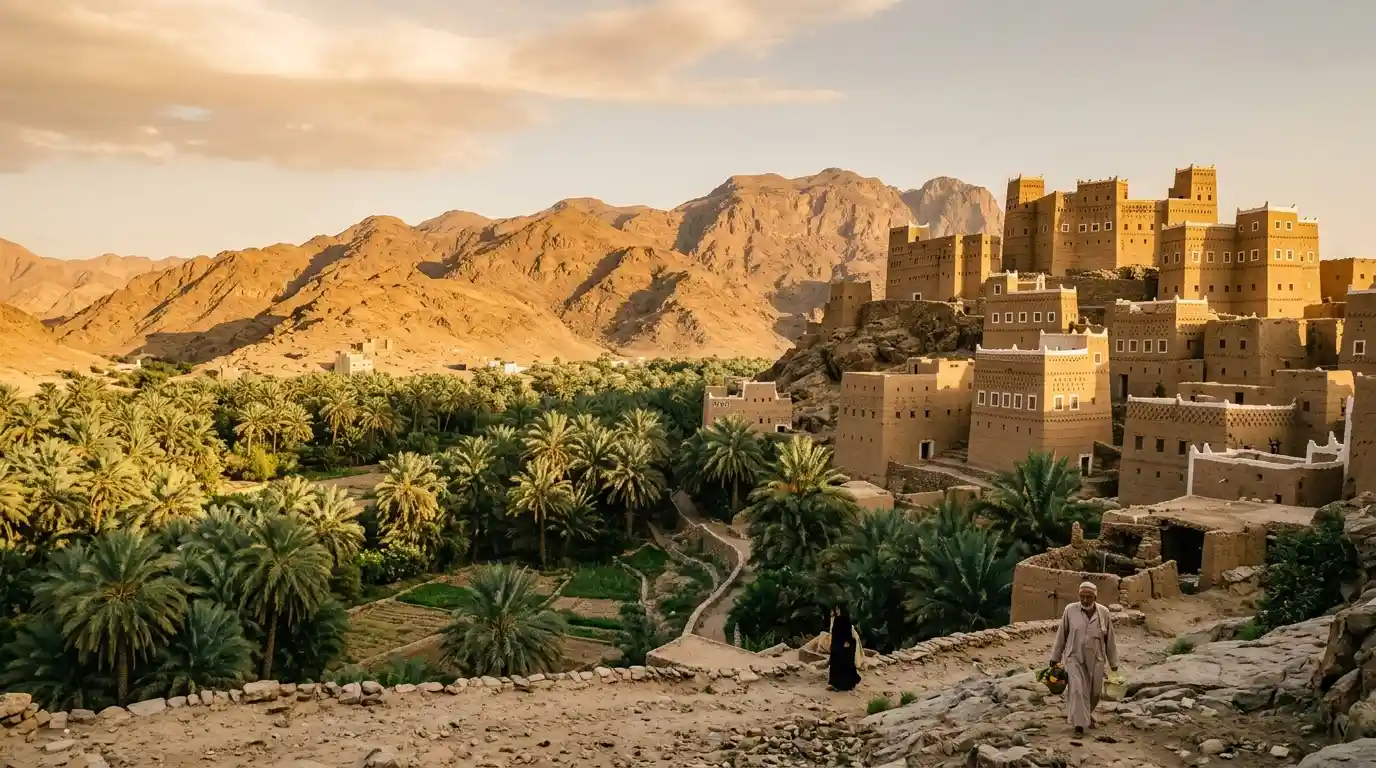
Winter also suits travelers interested in Najran’s landscapes. The contrast between earthen buildings, date palms, valley greenery and surrounding mountains is easier to explore when you can remain outdoors through different lighting conditions.
Once you choose your dates, use the Najran itinerary to group compatible parts of the destination without duplicating that route-planning work here.
November: A Strong Start to Najran’s Cooler Travel Season
November is an excellent choice if you want warmth without the intensity of summer. Najran’s autumn climate is still noticeably warmer than the core winter period, but conditions generally become progressively easier for heritage exploration as the season advances. Visit Saudi currently presents an autumn predicted range of about 13°C to 30°C.
For many travelers, this produces an attractive compromise. Afternoons can still feel warm and distinctly southern Saudi, while mornings and evenings may be much more comfortable for walking and photography.
November can work especially well for visitors who want an active itinerary combining archaeology, markets and outdoor architecture. You will still need sun protection and drinking water, but the day generally offers more scheduling freedom than peak summer.
Travelers whose trip is primarily cultural can use historical places in Najran to decide which heritage experiences deserve the comfortable outdoor hours.
December: Excellent for Heritage and Outdoor Exploration
December is one of the easiest periods for a first visit because cooler conditions support the kind of slow exploration Najran rewards.
Al-Ukhdood, traditional architecture and Wadi Najran can all involve substantial exposure to the elements. During the cooler season, visitors can spend more time observing archaeological remains, architectural details and landscape context instead of rushing through them to escape the heat.
The city also becomes easier for travelers who prefer walking within individual heritage areas. Najran is not a completely walkable city, but pleasant weather makes short heritage walks and market exploration much more enjoyable once you arrive in the appropriate district.
A winter trip should not be packed as though Najran were permanently hot. Morning and evening conditions can feel distinctly cool, particularly to visitors arriving from warmer Gulf coastal cities. Bring a light layer alongside ordinary sun protection.
January: One of the Strongest All-Round Choices
January sits firmly within Najran’s cooler season and is one of the best periods for travelers whose priorities include archaeology, photography and traditional architecture.
Visit Saudi’s official destination page presents Najran primarily as a heritage destination, highlighting Al-Ukhdood, Al-Aan Palace, the regional museum and the wider Ḥimā Cultural Area among the reasons to visit. Cooler conditions make it considerably easier to combine these types of experiences without turning each outdoor stop into a short visit.
This is also a strong family-travel period. Children generally tolerate parks, archaeological sites and walking more easily when adults do not need to manage severe heat continually.
For family-specific activity choices rather than seasonal advice, continue to Najran with kids.
February: Comfortable and Flexible
February remains an excellent candidate for the best time to visit Najran, particularly for travelers who want winter comfort while gradually moving toward somewhat warmer days.
The ability to remain outdoors for substantial portions of the day makes itinerary building easier. You can visit archaeology earlier, use an indoor museum or restaurant as a natural break and return outside later without the extreme contrast required during summer.
Photographers also gain flexibility because they can scout locations before the most attractive light rather than arriving moments before sunset simply to minimize heat exposure.
Travelers interested in building the trip around the city’s visual character can use Najran photography spots for location selection.
March: A Good Shoulder-Season Alternative
March can still be an attractive time to visit Najran, especially for travelers who prefer warm rather than cool conditions.
Visit Saudi’s predicted spring range rises to approximately 17°C to 34°C, which means the daily schedule increasingly depends on the actual weather and your tolerance for warmth. Earlier outdoor activity becomes useful, particularly for exposed archaeological sites, while a long indoor lunch or museum period can break up the warmest part of the day.
March often makes sense for travelers who want to combine urban heritage with road trips and do not mind adjusting their timing slightly.
The tradeoff is that you begin losing some of the effortless all-day outdoor comfort associated with winter. If heat sensitivity is a major concern, November through February remains the safer choice.
Spring: Increasingly Dependent on Heat Tolerance
As spring advances, deciding the best time to visit Najran becomes more personal.
Official seasonal guidance puts spring substantially warmer than winter, with predicted temperatures reaching the mid-30s Celsius at the upper end. For visitors accustomed to hot climates, this may still feel perfectly manageable with an intelligent itinerary. For travelers coming from cooler regions, long outdoor archaeology sessions can become tiring.
Use morning for the most exposed site you want to see. Move to a museum, restaurant, café or accommodation break during the warmer period, then return to heritage neighborhoods or markets later.
This scheduling approach is particularly effective because Najran has enough indoor cultural interest to provide meaningful alternatives rather than merely waiting inside a hotel.
If high temperatures disrupt outdoor plans, the workbook-mapped indoor things to do in Najran guide can help restructure the day.
Summer: Possible, but Not Ideal for a First Heritage-Focused Trip
Summer is generally not the best time to visit Najran if your primary goals are Al-Ukhdood, historic architecture, desert exploration and prolonged walking.
Visit Saudi currently places the predicted summer range around 22°C to 38°C, while NCM characterizes Najran Region as hot in summer. Actual conditions can vary, but this level of heat substantially changes what feels reasonable during daylight hours.
A summer trip remains possible. Air-conditioned hotels, restaurants, museums and vehicles allow ordinary travel to continue, but you should reorganize the itinerary. Outdoor archaeology belongs in the earlier hours when possible, the middle of the day should contain indoor or low-exposure activities, and longer walks become much more attractive later.
Evening experiences can take on a larger role during this period. Instead of attempting another exposed afternoon attraction, consider shifting more recreation toward the hours covered in things to do in Najran at night.
The important distinction is between whether Najran can be visited and whether summer provides the best experience. For most first-time heritage travelers, the answer favors the cooler season.
Best Time to Visit Al-Ukhdood
The best time to visit Najran if Al-Ukhdood is one of your main priorities is during the cooler months.
Visit Saudi currently promotes both the historical city and its archaeological visitor center, while its visitor-center information confirms that the site functions as a major introduction to Najran’s ancient past. Much of the experience, however, depends on spending time around exposed archaeological remains.
Winter allows you to slow down and look at fortifications, inscriptions, building remains and the wider landscape with less pressure from heat.
During warmer periods, arrive earlier when operating arrangements permit and combine the archaeological visit with Najran Regional Museum, which Visit Saudi describes as being close to the historical site.
This creates a practical outdoor-indoor pairing without duplicating the complete activity recommendations found in things to do in Najran.
Best Time for Ḥimā Cultural Area
The cooler season is also the most practical period for travelers making the substantial regional journey to Ḥimā Cultural Area.
UNESCO describes Ḥimā as an arid, mountainous archaeological landscape on an ancient Arabian caravan route, containing an extraordinary concentration of rock art, inscriptions and ancient wells. The environment itself is therefore an important part of the experience, and much of the visit takes place outside.
Lower temperatures make long road travel and exposed archaeological exploration more manageable. They also give you more margin if the visit takes longer than expected.
Do not choose dates solely from seasonal averages, however. Confirm current visitor access before departure and check the day’s weather, especially when driving through remote terrain.
The specialist day trips from Najran guide is the better place to decide whether Ḥimā fits your overall route.
Best Time for Desert Experiences
Najran’s proximity to major desert landscapes makes the cooler season the obvious choice for most visitors interested in dune environments, stargazing or camping.
Daytime temperatures become easier for outdoor activity, while the cooler air can make desert sunsets particularly pleasant. The tradeoff comes after dark: temperatures can fall substantially, so visitors should prepare for a wider day-to-night range rather than assuming the desert will remain warm.
A cooler-season desert trip is also more forgiving when activities involve vehicle stops, photography or sitting outside rather than remaining in continuous air-conditioned transport.
For activity logistics rather than seasonal recommendations, use desert safari in Najran and camping in Najran.
Travelers primarily interested in clear night skies can continue to stargazing in Najran.
Rain and Highland Conditions
Although Najran is generally dry, rainfall should not be ignored. NCM specifically notes rainfall in the highlands and describes the region’s terrain as including Wadi Najran alongside sandy plains and desert.
This matters because valleys can respond to rainfall that occurs somewhere upstream rather than directly where you are standing. Never enter flood-prone channels simply because the immediate surroundings appear dry.
Before long drives, camping, desert excursions or visits involving wadis, check current National Center for Meteorology forecasts and warnings.
Seasonal averages are useful for choosing when to travel. Short-term forecasts are what should determine whether a particular outdoor activity is sensible on the day.
Best Time to Visit Najran With Children
November through February is usually the easiest period for families.
Najran’s family appeal comes from archaeology, traditional architecture, museums, parks and culturally interesting everyday environments rather than theme-park-style attractions. Cooler weather gives children more tolerance for the outdoor components and allows parents to keep a flexible schedule.
Al-Ukhdood and other archaeological areas still require sun protection and appropriate footwear. Families making longer regional excursions should also think about how children handle extended driving rather than choosing a destination solely because of its heritage importance.
A park can provide an effective break between more demanding cultural stops. For options, see parks in Najran.
Best Time for Photography
Late autumn through early spring is particularly strong for photographers.
Najran’s traditional mud buildings, date palms and ochre terrain respond beautifully to angled morning and late-afternoon light. Cooler conditions make it easier to arrive early, scout compositions and remain outdoors until the light becomes favorable.
Winter also reduces the need to restrict every outdoor photography session to very short periods. This is especially valuable around architecture, where observing details and finding respectful public viewpoints takes time.
Avoid assuming that every traditional building is a public attraction. Some are part of living neighborhoods or private property.
Culturally focused photographers can combine this advice with culture and heritage in Najran for a stronger understanding of what they are photographing.
When Is Najran Most Crowded?
There is no reliable official month-by-month visitor dataset that supports naming one specific Najran month as universally the busiest. It is better to avoid manufacturing a peak-season claim.
Crowds can instead depend on weekends, public holidays, local events, school breaks and the popularity of individual attractions. A heritage site may feel quiet on one winter weekday and considerably more active during another leisure period.
If avoiding crowds is important, choosing weekdays and arriving earlier can be more useful than deliberately traveling during uncomfortable weather simply to find fewer visitors.
The best time to visit Najran should therefore be chosen primarily for weather and your intended experiences rather than an unsupported crowd calendar.
Weekdays vs Weekends
Weekdays are generally worth considering if you value quieter archaeological sites, relaxed museum visits and easier photography.
Weekends can provide a livelier atmosphere around restaurants, parks and family recreation. Neither is automatically better.
For a short trip, a weekend may be the only practical option and there is no reason to avoid Najran simply because other people are also enjoying the city. For photographers, couples or solo travelers who prefer slower heritage exploration, weekday periods can be more appealing.
The most important step is still checking current attraction operating arrangements, because opening schedules can matter more than theoretical crowd levels.
Best Time for Food, Markets and Local Culture
Najran’s food and market experiences are less season-dependent than exposed archaeology.
Traditional restaurants, cafés and commercial areas can be enjoyed throughout the year, making them particularly useful when hotter weather reduces the amount of time you want to spend outside. Evening market exploration can also become more attractive during warm periods.
Season can still influence the overall experience because pleasant weather allows you to combine a meal naturally with walking through traditional neighborhoods rather than traveling directly between air-conditioned interiors.
For regional dishes and culinary context, use food in Najran. Travelers interested in crafts, traditional goods and commercial areas can continue to shopping in Najran.
Best Time for a Road-Trip Style Visit
November through March provides the greatest flexibility for travelers planning to explore beyond central Najran.
Long drives are easier when intense summer heat is not dominating every roadside stop, and visitors have more freedom to pause for landscapes, archaeological sites or photography.
Vehicle reliability, fuel, water and current road conditions remain important regardless of season.
The wider province also includes sensitive border geography, so this is not a region for improvising long drives simply because an interesting road appears on a map. Plan destinations before setting out.
Travelers renting a vehicle can use driving in Najran for road-specific considerations, while getting around Najran covers the broader comparison between driving, taxis and arranged transport.
Where You Stay Can Make Hot Weather Easier
Accommodation location becomes more important as temperatures rise.
If your main priorities are central heritage attractions and restaurants, staying conveniently within Najran City can reduce unnecessary transfers and make midday hotel breaks easier. A poorly located hotel can turn a warm-weather trip into repeated long journeys across the city.
During cooler periods, travelers have more tolerance for a less central base because moving around is generally easier.
Rather than choosing a hotel based solely on price, compare the area options in where to stay in Najran.
Current Safety Considerations Should Override Seasonal Plans
Najran Province borders Yemen, so the best weather period is not the only factor to check before traveling.
Current UK travel guidance advises against all travel very close to the Saudi-Yemen border and against all but essential travel across a wider zone beyond it. It also notes that airports near the border can sometimes face temporary disruption and that tourist trips to military zones and border posts are prohibited. Current U.S. guidance likewise advises against travel to the Yemen border.
Najran City should not automatically be treated as equivalent to the international border zone, but regional conditions can change. Check guidance applicable to your nationality, follow Saudi authority instructions and reconfirm flights before departure.
Seasonal comfort should never override a current official security restriction.
What to Pack During the Cooler Season
Even during the best time to visit Najran, pack for strong sunshine as well as cooler air.
Lightweight, modest clothing remains appropriate for much of the day, while a light or medium layer is useful for early mornings, evenings and cooler conditions. Comfortable closed shoes are valuable for archaeological sites and uneven heritage environments.
Bring sunscreen, sunglasses and drinking water. Winter temperatures may be lower, but long exposure to desert sun still matters.
If camping or spending significant time outside after dark, carry warmer clothing than you would need for ordinary daytime city sightseeing.
What to Pack During Warmer Weather
Warmer trips require more deliberate heat management.
Choose breathable clothing appropriate for Saudi public settings, carry water consistently and use strong sun protection. A hat can make archaeological and desert stops substantially easier.
Do not assume that air-conditioned vehicles eliminate heat risk. You still need to walk between parking areas and attractions, and heritage sites may have limited shade.
A summer visitor should also plan indoor breaks before feeling exhausted rather than waiting until heat becomes a problem.
So, What Is the Best Time to Visit Najran?
For most travelers, November through February is the best time to visit Najran. Official Visit Saudi guidance shows winter temperatures around 11°C to 27°C, substantially below the summer predicted range, while NCM characterizes Najran’s regional climate as hot in summer and cold in winter.
That cooler period is particularly valuable because Najran’s strongest experiences—Al-Ukhdood, mud-brick architecture, historic neighborhoods, valley landscapes and regional archaeology—depend heavily on comfortable outdoor conditions.
March and late autumn can provide excellent alternatives for travelers who prefer warmer weather. Summer remains possible but requires a more disciplined schedule built around early activity, indoor midday breaks and later outdoor exploration.
There is no reliable reason to choose a particular month solely for crowds. Weekday timing and attraction-specific demand can matter more than a broad seasonal label.
Ultimately, the best time to visit Najran is when the weather allows you to experience its heritage slowly. This is a destination where details matter: inscriptions, earthen architecture, valley agriculture, archaeological landscapes and local craft traditions all reward observation rather than rushing.
Frequently Asked Questions
What months are best for visiting Najran?
November through February provide the strongest overall conditions for most travelers because temperatures are generally more comfortable for archaeology, walking, heritage areas and road trips.
Is December a good time to visit Najran?
Yes. December falls within the cooler season and is particularly suitable for outdoor heritage attractions, traditional neighborhoods and photography.
Is January a good time to visit Najran?
Yes. January is one of the most comfortable periods for a heritage-focused visit and gives travelers considerable flexibility for outdoor sightseeing.
Is February a good time to visit Najran?
Yes. February generally retains the advantages of the cooler season while gradually moving toward warmer spring conditions.
Is March a good time to visit Najran?
Yes. March is a useful shoulder-season option for travelers who prefer warmer days, although outdoor activity increasingly benefits from being scheduled earlier or later.
Is Najran very hot in summer?
It can be. Visit Saudi currently shows predicted summer temperatures of approximately 22°C to 38°C, while NCM characterizes the region as hot in summer.
What is the best time for Al-Ukhdood?
The cooler months are generally easiest because much of the archaeological experience takes place outdoors with limited protection from the sun.
What is the best time for visiting Ḥimā Cultural Area?
Cooler weather is preferable for its exposed arid and mountainous archaeological landscape. UNESCO describes Ḥimā as an extensive outdoor cultural area containing rock art, inscriptions and ancient wells.
When is the best time to visit Najran with children?
November through February are particularly practical for families because cooler conditions make archaeological sites, parks and walking easier to manage.
Does Najran get rain?
Najran is generally dry, but NCM specifically notes rainfall in the highlands. Always check current forecasts before wadi, desert or remote road travel.
When is Najran least crowded?
There is no authoritative monthly crowd dataset for Najran. Weekdays and earlier visiting periods may provide quieter experiences at some attractions, but operating schedules and local events also affect visitor numbers.
Is winter cold in Najran?
Winter is much cooler than summer, with Visit Saudi showing a predicted seasonal range around 11°C to 27°C. Conditions are generally comfortable for daytime sightseeing, but mornings and evenings can require an additional layer.